
Slipped Tendon: The gastrocnemius tendon runs behind the hock joint, similar to theAchilles tendon in a human. In a healthy chick, it sits in a grooveat the back of the hock. If that tendon slips out, it usually slipsto the inside or outside of the joint, causing the leg to twistbackward or outward. You canContinue reading “Slipped Tendon”
Category Archives: Chicken Vet Corner Files
CVC Vets and Labs

https://docs.google.com/spreadsheets/d/10D8y2P_Q6U7C7nnV7f0T5JuQZiECzZl2-CcffH2j08k/edit?gid=0#gid=0 Click link above to access the list!
Flystrike

Flystrike (Myasis) occurs when adult flies lay their eggs in a chicken’s skin/body in a moist wound, skin lesion or soiled coat (below the vent). The larvae will then move around the wound surface eating dead cells, secretions, debris, etc., irritating, injuring or killing additional layers of sking that will then produce exudates and lesionsContinue reading “Flystrike”
Fresh Eggs In The Fridge: How Long Are They Good For

By Elena Johnson CVC AC How long are fresh eggs good for in the fridge? 6 months Once refrigerated, they must continue to stay in the fridge until use but will stay good up to 6 months (or more). Fresh eggs are very hardy. Store bought eggs can be an average of 3 weeks toContinue reading “Fresh Eggs In The Fridge: How Long Are They Good For”
Fertile Eggs: How to Spot Them

By Elena Johnson CVC AC All eggs may not be fertile even if the hen has mated with a rooster. It takes 7-10 days for the sperm to reach the oviduct where the eggs are made. However, her eggs will remain fertile, even if she doesn’t mate again for around 2-3 weeks after mating. FertilityContinue reading “Fertile Eggs: How to Spot Them”
Pendulus Crop

By Elena Johnson CVC AC Pendulous crop is an abnormal condition in chickens where the crop becomes distended from it’s normal position and fills with invested feed and fluid. Chickens who are raised entirely on pelleted feed are more at risk of developing this as a result of the modification of gut flow due toContinue reading “Pendulus Crop”
Geese Angel Wing
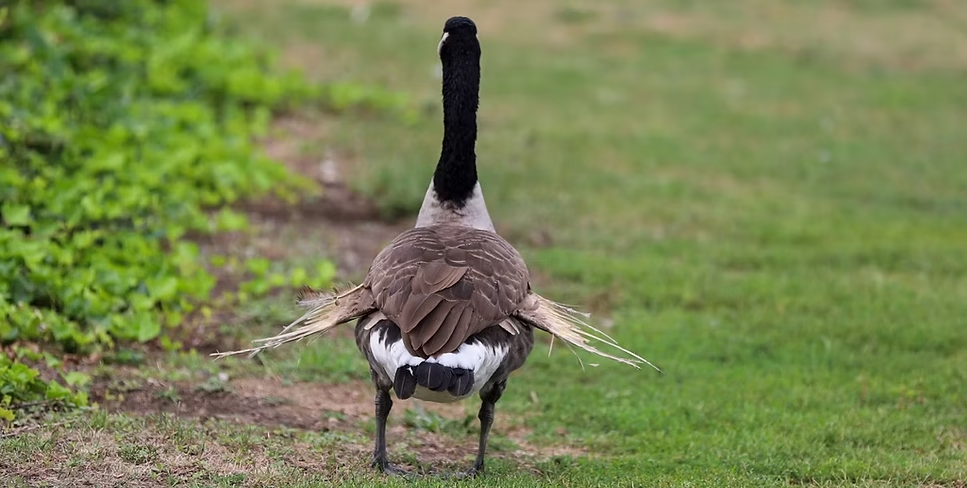
By Elena Johnson CVC AC Angel Wing: also known as slipped wing or dropped wing, is where the wing joint deforms and twists. The growing primary feathers are full of blood which make it heavy and can cause the wing to twist and drop. This causes the feathers to stick out at an odd angle, usuallyContinue reading “Geese Angel Wing”
Hens Can Crow

By Elena Johnson CVC AC Yes, hens can crow. It’s not as loud as a rooster but not uncommon in flocks of all hens. In many cases the dominant hen will become the protector of the flock, in addition to the half crow, she may cease to lay eggs and even grow spurs to rivalContinue reading “Hens Can Crow”
Hot Weather Tips

By Elena Johnson CVC AC Chickens can’t sweat so you do not want to wet them down, this does inhibit the same down that keeps them warm from helping them cool. A misting fan helps, kiddie pools in the shade, shade and air flow is key to keeping them cool. The coop should have aContinue reading “Hot Weather Tips”
Oyster Shell Soft Shelled Eggs

By Elena Johnson CVC AC It takes 25 hours to form an egg, 18-20 of those hours is spent on shell formation. In those hours, the hen uses and replaces the calcium carried in the bloodstream up to 100 times. The calcium required to make shells must be provided in the hen’s diet as fast-releasedContinue reading “Oyster Shell Soft Shelled Eggs”
Sudden Death Syndrome

By Elena Johnson CVC AC SDS (sudden death syndrome) is a metabolic condition which occurs most often in commercial broilers and related Cornish breeds. Chickens exhibit a sudden attack just prior to death (37-69 seconds) characterized by loss of balance, strong muscle contractions and violent flapping of their wings. The loss of balance and flappingContinue reading “Sudden Death Syndrome”
Lash Eggs: What To Know

By Elena Johnson CVC AC More than you wanted to know about the cause of “Lash Eggs” and Salpingitis. Instead of getting your expected egg in the nesting box, one day you may come into the surprise of finding an egg-shaped ball of caseous exudate. Caseous means “resembling cheese or curd” and an exudate isContinue reading “Lash Eggs: What To Know”
Roosters: How to Tame them

By Elena Johnson CVC AC Some breeds of roosters are naturally more aggressive, Rhode Island Reds are notoriously difficult. You must first understand why roosters attack. It’s just a fact of chickens that there is a pecking order, if you don’t have a rooster, you will also see this in your hens. One will takeContinue reading “Roosters: How to Tame them”
Turkey Nutrition & Other Facts

By Elena Johnson CVC AC Turkeys have different nutritional requirements than chickens and usually should be kept separate from chickens because of this and diseases such as Black Head (Histomoniasis) which is usually fatal in young poults. Chickens can serve as the host for the cecal worm and therefore the Histomonas parasite. There is noContinue reading “Turkey Nutrition & Other Facts”
Chicks Nutrition

By Elena Johnson CVC AC Chicks should be on Chick Starter crumbles. The first couple days of a chick’s life is very important when speaking of nutrition. The first day chicks should be given Grogel, this is something you mix with water that turns into a bright green gel that attracts the chicks to feed.Continue reading “Chicks Nutrition”
Duck Nutrition

By Elena Johnson CVC AC Ducks, unlike other poultry, do not actually require “protein” but the individual amino acids contained in dietary proteins. The proteins in the diet are broken down during digestion to amino acids which are absorbed and used by the duck to make its own body proteins, such as those in muscleContinue reading “Duck Nutrition”
Chicken Coop

By Elena Johnson CVC AC Regarding Coop & Run sand I use construction sand 4-6 inches in the run and coop. You don’t want sand that packs down when you walk in it or squeeze it in your hand, so no play sand because it is crushed quartz or patio sand used for a baseContinue reading “Chicken Coop”
Bruising

By Elena Johnson CVC AC Bruising in chickens is often indicative of a crush injury. It appears as a greenish discoloration of the skin. The green color is the result of the accumulation of biliverdin accumulation, which occurs after hemoglobin is broken down. Bruising generally takes about 2 to 3 days post injury to becomeContinue reading “Bruising”
Broody Hens

By Elena Johsnon CVC AC If you’re not hatching out eggs, you must break broodiness as soon as it starts, or your hen is going to suffer from malnutrition. They will sit on eggs and only leave the nest once a day, if that, to eat, drink and poop. This is very unhealthy for themContinue reading “Broody Hens”
Apple Cider Vinegar

By Elena Johnson CVC AC Apple Cider Vinegar, ACV (acetic acid) actually lowers the amounts of good bacteria in the crop and digestive tract and there are not enough studies from actual poultry experts to show it has any health benefits at all and the internet claims are grossly exaggerated. By killing good bacteria, itContinue reading “Apple Cider Vinegar”
Chicken Nutrition

By Elena Johnson CVC AC We get a lot of questions on feeding your laying hens, so I’ve put together a feeding guide that may help get you on the right track. Nutrition is key to keeping your flock healthy. You should only feed a good quality layer feed, (16% protein), Grit, clean water andContinue reading “Chicken Nutrition”
Feather Loss

By Elena Johnson – CVC AC Here is a link explaining all things feather loss: The Avice Hub – Feather Loss It is important to make sure your chickens are naturally molting and not infested with mites or lice so make sure to check under the wings and near the vent for parasites. You canContinue reading “Feather Loss”
Meds to stay away from

Metronidazole, Ronidazole, Tinidazole and any -zole antiprotozoal medication. They are illegal to use in food producing species in the United States and carry a lifetime egg withdrawal if used. The FDA considers ALL poultry a food producing species, even if you consider them “pets”. This is PROHIBITED for both male and female birds of ALL food producing animals:Continue reading “Meds to stay away from”
Flouroquinolones (Baytril)

By Becky Salinger A word about why Baytril (enrofloxacin) and all other flouroquinolones are banned for use in poultry in the US. It is illegal for any veterinarian to prescribe any flouroquinolone for any chicken, duck etc. Yes it works, yes it sucks- but it’s for the greater good. Sadly or surprisingly a lot ofContinue reading “Flouroquinolones (Baytril)”
Sevin Dust: What To Know

Sevin Dust, most Doktor Doom, and any pesticides not labeled for poultry, including all the topical flea and tick meds labeled for cats and dogs, all are illegal in the USA. Pesticides have no allowable off-label usage per the EPA. They must be directly labeled for poultry and the application directions must be followed toContinue reading “Sevin Dust: What To Know”
Diatomaceous Earth (DE): What To Know

In collaboration with Allie Krapiec Using diatomaceous earth (DE) in chicken dust baths is common, but it has real risks for both chickens and humans, especially depending on the type and how it’s applied. Diatoms are single-celled algae that inhabit streams, lakes, oceans and other waterways. Fossilized diatoms, whose cell walls are made of silica,Continue reading “Diatomaceous Earth (DE): What To Know”
Blu-Kote: What To Know

Blu-Kote/Red-Kote, scarlet oil OR similar products are harsh on wounds, damage tissue and slow healing. They are mainly rubbing alcohol and we all know how great that feels on small cut, let alone a gaping wound. They delay healing because it damages healthy tissue due to the high alcohol content. These are NOT regulated byContinue reading “Blu-Kote: What To Know”
Chicken Eggs: What to know

As you may know, egg production may result in some odd–looking eggs. It’s often a topic in CVC, let’s go into some of the most common egg oddities in poultry eggs and can hopefully help with your concerns. Some of these deviations may impact egg quality and result in eggs that should be discarded. ItContinue reading “Chicken Eggs: What to know”
Canker (Trichomonosis)

Canker is an infection caused by protozoan parasites and characterized by caseous oral accumulation, raised caseous lesions in the upper digestive tract and weight loss. The protozoa live in the sinuses, mout, throat, esophagus, liver and other organs. The organism is fragile in the environment and transmission occurs through contact with infected oral secretions orContinue reading “Canker (Trichomonosis)”
Avian Leukosis in Poultry

Avian Leukosis (ALV) are leukaemia-like proliferative diseases caused by the avian leukosis virus. These are retrovirus-caused diseases. Transmission: mostly through egg transmission. Chicks hatched from infected eggs will be immune tolerant and won’t develop antibodies, have an increased risk of death, lay fewer eggs and will shed virus into their own eggs, perpetuating the infection.Continue reading “Avian Leukosis in Poultry”
Coelomitis (Egg yolk peritonitis)

Egg-yolk peritonitis (EYP) is the inflammation of the coelom of a han as a response to yolk material deposited into the body cavity. Yolk is an excellent bacterial growth medium, which means that this can lead to disease such as Escherichia Coli. EYP, complicated with bacterial infection, will most often lead to sporadic death inContinue reading “Coelomitis (Egg yolk peritonitis)”
Egg-binding in chickens

An egg-bound chicken happens when she’s straining to produce an egg for more than a few hours. This can happen due to low calcium levels, poor nutrition, excessive laying, premature egg production, old age, trauma, obesity or mycotoxins. Symptoms: frequent nestbox sitting, trying to lay eggs without producing any, depression, tail wagging, abdominal distension (accumulatedContinue reading “Egg-binding in chickens”
Marek’s Disease

Marek’s Disease. Marek’s disease (MD) is a herpesvirus-induced neoplastic disease of chickens characterized by infiltration of various nerve trunks and/or organs with pleomorphic lymphoid cells. It’s observed mostly in chickens and occurs most commonly in young, sexually immature chickens (2-7 months old) but can occur at basically any age after 3 weeks old. A Marek’sContinue reading “Marek’s Disease”
Poultry Fecal Analysis (Poop)

1- Normal fecal droppings: Intestinal Droppings: voided as digestive waste with white uric acid crystals on the outer surface. Cecal Droppings: Normally expelled 2 or 3 times a day (one every 8 to 10 droppings). May look pasty, smell worse than intestinal droppings and are often light to dark brown in color. 2- Abnormal CecalContinue reading “Poultry Fecal Analysis (Poop)”
Candidiasis (Sour Crop)

Also known as Thrush. It’s an infection in the chicken’s crop (digestive tract) caused by the build up of the yeast-like fungus Candida (primarily, albicans). Symptoms: You can identify these through changes in behavior, delayed crop emptying, regurgitation, reduced appetite, depression/lethargy, white oral lesions in the form of plaques or patches (inside their mouth orContinue reading “Candidiasis (Sour Crop)”
Impacted Crop

Crop impaction happens when there’s interference with the normal functioning of the crop, meaning it’s partially or completely blocked. If the crop is impacted, you should be able to palpate the crop and feel it full of contents. Causes: mostly happens from eating things that are not digestible. Some examples: string, carpets, long blades ofContinue reading “Impacted Crop”
Favus (ringworm)

Avian ringworm is a fungal skin infection caused by dermatophytes. Affected chickens may develop white, powdery spots and wrinkled crusts with scabs in the comb or wattle. The fungi can spread to their head, beak and eyelids. Favus can be transmitted horizontally through direct or indirect contact with infected birds. It’s usually treated with fungicidalContinue reading “Favus (ringworm)”
Ascites Syndrome (Water Belly)

In collaboration with Elena Johnson, CVC AC Ascites Syndrome refers to right heart failure and valvular insufficiency, due mostly to pulmonary hypertension. It’s one of the most important causes of mortality in broiler chicken flocks. This is a cardiovascular disease unique to broilers, and it’s directly linked to rapid growth rate. Their internal organs cannotContinue reading “Ascites Syndrome (Water Belly)”
Wry Neck (Torticollis)

In collaboration with CVC AC Elena Johnson Wry Neck is a condition where the chicken’s neck is bent and twisted, meaning their head is oriented to the back, down, left or right – sometimes even leading to birds not being able to hold their head up on their own. The thing is Wry Neck isContinue reading “Wry Neck (Torticollis)”
Egg Yolk: What To know

1. Multiple and double yolk: 2, 3 or more yolks within one egg. It’s caused by rapid ovulation or a reproductive cycle that is not in sync. Could be the contents of more than one egg, or twin yolks as part of a pair. Most common in young hens just starting to lay, or olderContinue reading “Egg Yolk: What To know”
CVC Rules and Guidelines

Please carefully read through ALL the rules/guidelines (yes there are a lot, but they are necessary for the safety for our members) to avoid any confusion or misunderstanding down the road. This group is based in the United States, with the majority of our members in the US. All advice given needs to follow the rules andContinue reading “CVC Rules and Guidelines”
Medicine Cabinet

Here are the basics of what to have in your medicine cabinet for routine care and emergencies. Before purchasing medications/supplements, make sure you are able to store them properly and frequently go through what you have acquired to ensure nothing is expired. For minor wound care and minor abrasions (all major wounds should be assessed byContinue reading “Medicine Cabinet”
Vent Gleet (Cloacitis)

Cloacitis aka Vent Gleet is the inflammation of the cloaca caused by bacterial, viral, mycotic or parasitic infections. It can affect the gastrointestinal, reproductive and/or renal/urologic systems. Symptoms may include Causes Treatment If it’s a simple fungal cause, you can do the following home treatment and if there is no improvement in 3-4 days, youContinue reading “Vent Gleet (Cloacitis)”
Cloacal Prolapse

Cloacal prolapse is when the inner tissues of the cloaca protrude from the vent, exposing the intestines, cloaca and/or uterus. The cloaca is comprised of compartments: the largest is the coprodeum, the smallest is the urodeum, and the proctodeum. The coprodeum is responsible for communicating with the distal colon, the urodeum communicates with the distal uretersContinue reading “Cloacal Prolapse”
Mites and Chickens

There are 9 species of mites that can affect various species of poultry. Some are more common than others. Mites, for the most part are species specific, so while they may hop a ride on you or another animal (some do bite), they will not take up long term residence. Treatment The only approved productsContinue reading “Mites and Chickens”
Lice and Chickens

There are many species of lice that affect various species of poultry and waterfowl, some are more common than others. Avian lice, which belong to the order Mallophaga, have a life cycle of ~3 weeks and normally feed on bits of skin or feather products. Lice may live for several months on the host butContinue reading “Lice and Chickens”
Coccidiosis

Coccidiosis is caused by a one celled parasite of the genus Eimeria. There are 7 strains of Eimeria that can affect chickens and 4 that affect turkeys. Chicken Coccidia species: Eimeria acervulina, Eimeria maxima, Eimeria tenella, Eimeria necatrix, Eimeria mitis, Eimeria brunetti, Eimeria praecox Turkey Coccidia species: Eimeria adenoeides, Eimeria meleagrimitis, Eimeria gallopavonis, Eimeria dispersa The lifeContinue reading “Coccidiosis”
Fowl Pox

Fowl pox is a viral infection that affects chickens and turkeys. It is slow spreading. There are 3 forms of fowl pox: Cutaneous (dry pox), Diphtheritic (wet pox) and Systemic. Fowl pox is world wide, but more prevalent in warm, high humidity areas and areas where there is a high population of mosquitoes as theyContinue reading “Fowl Pox”
Splay Leg

Splay leg is a condition of the musculoskeletal system that affects the coxofemoral joint, femur, stifle joint, tibiotarsus, tarsal joint, and/or tarsometatarsus. This causes one or both of the chicks legs to “splay” to the side and makes it so they cannot stand upright. Splay leg has several causes and for the best prognosis, properContinue reading “Splay Leg”
Chicken Eye Sight

Chickens see in tetra-chromatic (they can see red, blue and green light as well as ultraviolet light). They can also see 300 degrees. They see more colors and shades than humans. They have mono-vision – the left eye is far sighted and the right eye is near sighted. They use their left eye to watchContinue reading “Chicken Eye Sight”
Medicated Feed

One of the biggest myths floating around the internet is that medicated feed is toxic to waterfowl and no scientific data to back it up. The most common and readily available medication in feed (most often found in chick starter) is Amprolium. Amprolium is safe for waterfowl as long as it is fed at theContinue reading “Medicated Feed”
Blue Eggs: Understanding Why they’re Blue

By Jessie Collins Did you know that there are only 2 egg shell colors – blue (green eggs are a variation of the blue egg) and white. Brown, tan, cream, olive, etc. are due to the pigment that is deposited on the blue or white egg shell. So what makes a blue egg blue? BlueContinue reading “Blue Eggs: Understanding Why they’re Blue”
VetRx

Did you know that VetRx is NOT a treatment for respiratory diseases. The majority of respiratory diseases CANNOT be cured (birds will remain lifelong carriers). Some of the symptoms may be managed with appropriate antibiotics and VetRx may alleviate some of the milder symptoms, but it is in no way an actual treatment. The activeContinue reading “VetRx”
Rooster Spurs

By Dr. Alicia Nolfi This is a topic that generates a lot of discussion. Given the amount of posts we have on here daily, relative to the amount of memebers we have, I can’t guarantee that all questions here will be addressed. We want to answer as many posts as we can – so urgentContinue reading “Rooster Spurs”
Respiratory Illnesses

Here are the 10 more common respiratory illnesses in poultry (all the mycoplasmas are lumped together). Of the 10, only 2 can be completely treated with antibiotics and 1 must run it’s course. All the others are not curable and birds will remain carriers, infect any new birds introduced and you run the risk ofContinue reading “Respiratory Illnesses”
Necropsy Examination

Common Questions

By Deb Haines 1) How can I keep my waterer clean without ACV? https://www.facebook.com/groups/chickenvetcornerschickentalkoriginal/posts/3475013439308426/ 2) what can be used to cover a wound?https://www.facebook.com/groups/552851661524633/permalink/632283596914772/ 3) What to do about a ruptured air sac?https://www.facebook.com/groups/552851661524633/permalink/630800653729733/ 4) Why does the end of my rooster’s comb turn purple or black?https://www.facebook.com/groups/552851661524633/permalink/635003566642775/ https://www.facebook.com/groups/552851661524633/permalink/636907299785735/ 5) Why would a chicken be drinking a lotContinue reading “Common Questions”
Egg Withdrawl Times in the US

By Dr. Laura Pylman Approved Products for Laying Hens Not Approved (can only be used by veterinary prescription even when available OTC, consult your veterinarian for withdrawal times appropriate to your specific situation) Not Allowed STRICTLY PROHIBITED -ILLEGAL TO USE lifetime withdrawal All egg withdrawal times have been obtained through The Food Animal Avoidance ResidueContinue reading “Egg Withdrawl Times in the US”
Mixing Instructions for Common Medications in Drinking Water

By Dr. Laura Pylman Antibiotics/Antiprotozoals Oxytetracycline Powder (10gram per 6.4oz packet strength)-2.5 TBSP per gallon Oxytetracycline Powder (102.4gram per 280gram packet strength) -1 tsp per gallon Oxytetracycline Powder 343 (Agrimycin 343) -1/2 tsp per gallon Tetracycline (Duramycin 10) powder -1 TBSP per gallon Corid (Amprollium) Liquid 9.6% -8cc per gallon Corid Powder -1.25 tsp perContinue reading “Mixing Instructions for Common Medications in Drinking Water”
Upper Leg Fracture: How to Wrap It

By Dr. Laura Pylman https://www.facebook.com/groups/552851661524633/permalink/663858987090566/
Plants Toxic to Chickens

By Deb Haines This list is a start, there are many more Toxic plants/harmful plants ,I will add to list as I research the plants finding veterinary documentation through studies that are either toxic or could be harmful to chickens. Toxic does not necessarily mean fatal. It usually refers to a substance which may causeContinue reading “Plants Toxic to Chickens”
Newcastle Disease

Synonyms: pneumoencephalitis The highly contagious and lethal form of Newcastle disease is known as viscerotropic (attacks the internal organs) velogenic Newcastle disease, VVND, exotic Newcastle disease, or Asiatic Newcastle disease. VVND is not present in the United States poultry industry at this time. Species affected: Newcastle disease affects all birds of all ages. Humans andContinue reading “Newcastle Disease”
Infectious Bronchitis

Synonyms: IB, bronchitis, cold Species affected: Infectious bronchitis is a disease of chickens only. A similar disease occurs in bobwhite quail (quail bronchitis), but it is caused by a different virus. Clinical signs: The severity of infectious bronchitis infection is influenced by the age and immune status of the flock, by environmental conditions, and byContinue reading “Infectious Bronchitis”
Avian Influenza

Synonyms: AI, flu, influenza, fowl plague Species affected: Avian influenza can occur in most, if not all, species of birds. Clinical signs: Avian influenza is categorized as mild or highly pathogenic. The mild form produces listlessness, loss of appetite, respiratory distress, diarrhea, transient drops in egg production, and low mortality. The highly pathogenic form producesContinue reading “Avian Influenza”
Infectious Coryza

Synonyms: roup, cold, coryza Species affected: chickens, pheasants, and guinea fowl. Common in game chicken flocks. Clinical signs: Swelling around the face, foul smelling, thick, sticky discharge from the nostrils and eyes, labored breathing, and rales (rattles—an abnormal breathing sound) are common clinical signs. The eyelids are irritated and may stick together. The birds mayContinue reading “Infectious Coryza”
Infectious Laryngotracheitis

Synonyms: LT, ILT, trach, laryngo Species affected: Chickens and pheasants are affected by LT. Chickens 14 weeks and older are more susceptible than young chickens. Most LT outbreaks occur in mature hens. In recent years, LT has also caused significant respiratory problems in broilers greater than 3 weeks of age, especially during the cooler seasonsContinue reading “Infectious Laryngotracheitis”
Chlamydiosis

Synonyms: ornithosis, psittacosis, parrot fever The disease was called psittacosis or parrot fever when diagnosed in psittacine (curve-beaked) birds, and called ornithosis when diagnosed in all other birds or in humans. Currently, the term chlamydiosis is used to describe infections in any animal. Species affected: Affected species include turkeys, pigeons, ducks, psittacine (curve-beaked) birds, captiveContinue reading “Chlamydiosis”
Swollen Head Syndrome

Synonyms: Facial cellulitis, thick head, Dikkop, SHS Species affected: Chickens and turkeys are the known natural hosts. Experimentally, guinea fowl and pheasants are susceptible but pigeons, ducks, and geese are resistant to the infection. SHS does not presently occur in the United States, but is present in most countries of the world. Clinical signs: InContinue reading “Swollen Head Syndrome”
Mycoplasma Synoviae

Synonyms: MS, infectious synovitis, synovitis, silent air sac Species affected: chickens and turkeys. Clinical signs: Birds infected with the synovitis form show lameness, followed by lethargy, reluctance to move, swollen joints, stilted gait, loss of weight, and formation of breast blisters. Birds infected with the respiratory form exhibit respiratory distress. Greenish diarrhea is common inContinue reading “Mycoplasma Synoviae”
Mycoplasma Meleagridis

Synonyms: MM, N strain, H strain Species affected: MM affects turkeys of all ages, although poults are affected more severely than mature turkeys. Recently, MM has been shown to infect pigeon, quail and peafowl. Clinical signs: A drop-off in production and hatchability can be expected in breeder flocks. There can be very high mortality inContinue reading “Mycoplasma Meleagridis”
Aspergillosis

Synonyms: brooder pneumonia, mycotic pneumonia, fungal pneumonia, Aspergillus. When the source of the disease is the hatchery, the disease is called brooder pneumonia. In older birds, the disease is called aspergillosis. Species affected: All birds (domestic poultry, pigeons, canary and zoo bird species), animals, humans, and plants are susceptible. Clinical signs: Aspergillosis occurs as anContinue reading “Aspergillosis”
Infectious Bursal Disease

Synonyms: Gumboro, IBD, infectious bursitis, infectious avian nephrosis Species affected: chickens Clinical signs: In affected chickens greater than 3 weeks of age, there is usually a rapid onset of the disease with a sudden drop in feed and water consumption, watery droppings leading to soiling of feathers around the vent, and vent pecking. Feathers appearContinue reading “Infectious Bursal Disease”
Equine Encephalitis

Synonyms: EE, EEE, WEE Note: This disease should not be confused with St. Louis Encephalits (SLE). Chickens are used as sentinels (test animals) in SLE suspect areas, such as southern Florida. While SLE is also carried by mosquitos, that is where the similarities between the two encephalitis diseases end. Chickens do not get SLE. ReferContinue reading “Equine Encephalitis”
Egg Drop Syndrome

Synonyms: egg drop, egg drop syndrome 76, EDS-76 Species affected: The natural hosts for EDS virus are ducks and geese, but EDS has become a major cause of reduced egg production in chickens in many parts of the world. No illness has been observed in ducks or geese. Chickens of all ages and breeds areContinue reading “Egg Drop Syndrome”
Infectious Tenosynovitis

Synonyms: viral arthritis, tenosynovitis, teno, reovirus enteritis, reovirus septicemia, malabsorption syndrome, helicopter disease Species affected: turkeys and chickens Clinical signs: Several serotypes of the reovirus have been identified. Some localize in the joints (tenosynovitis) while others target respiratory or intestinal tissues (septicemic form) (see Table 2). The principal sign of tenosynovitis is lameness with swellingContinue reading “Infectious Tenosynovitis”
Omphalitis (Navel ill)

Synonyms: navel ill, mushy chick disease Species affected: chickens Clinical signs: Affected chicks may have external navel infection, large unabsorbed yolk sacs, peritonitis with fetid odor, exudates adhering to the navel, edema of the skin of ventral body area, septicemia and dehydration. Transmission: Infection occurs at the time of hatching or shortly thereafter, before navelsContinue reading “Omphalitis (Navel ill)”
Pullorum (BWD)

Synonyms: bacillary white diarrhea, BWD Species affected: Chickens and turkeys are most susceptible, although other species of birds can become infected. Pullorum has never been a problem in commercially grown game birds such as pheasant, chukar partridge, and quail. Infection in mammals is rare. Clinical signs: Death of infected chicks or poults begins at 5–7Continue reading “Pullorum (BWD)”
Necrotic Enteritis (Rot Gut)

Synonyms: enterotoxemia, rot gut Species affected: Rapidly growing young birds, especially chickens and turkeys 2-12 weeks of age, are most susceptible. Necrotic enteritis is a disease associated with domestication and is unlikely to threaten wild bird populations. Necrotic enteritis is primarily a disease of broilers, roasters and turkeys. Ulcerative enteritis, on the other hand, commonlyContinue reading “Necrotic Enteritis (Rot Gut)”
Botulism

Synonyms: limberneck, bulbar paralysis, western duck sickness, alkali disease Species affected: All fowl of any age, humans, and other animals are highly susceptible. The turkey vulture is the only animal host known to be resistant to the disease .Clinical signs: Botulism is a poisoning causing by eating spoiled food containing a neurotoxin produced by theContinue reading “Botulism”
Vitamin E and Selenium Deficiency

By Deb Haines Clinical Description The clinical signs of vitamin E deficiency typically develop in chicks between 15 and 30 days old. Nervous signs may include ataxia, opisthotonus, torticollis, myoclonus, paresis, and eventually prostration. These nervous signs are caused by encephalomalacia of the cerebellum and cerebrum. If vitamin E deficiency is identified and treated inContinue reading “Vitamin E and Selenium Deficiency”
Euthanasia (Chickens) : When and How?

By Deb Haines Euthanasia is a very emotional, controversial, and uncomfortable subject, especially when talking to people with different backgrounds. There are two huge questions surrounding euthanasia….When and how ? It depends on your opinion on quality of life, and your morality surrounding death. Refusing to euthanize an animal no matter the circumstances, is detrimentalContinue reading “Euthanasia (Chickens) : When and How?”
Veterinary Teaching Links and Treatments

By Deb Haines Zoologix Poultry Respiratory Panel Respiratory illness in chickens ….. Dummies – Respiratory Illness in Chickens NCBI – Housing and dustbathing effects on northern fowl mites (Ornithonyssus sylviarum) and chicken body lice (Menacanthus stramineus) on hens PCR Testing ….. https://l.facebook.com/l.php?u=http%3A%2F%2Fwww.zoologix.com%2Favian%2Findex.htm&h=ATNBfEZr70p8eSTW2OH9AYZCwvaUinNperLUpToY_IQUL0nU41UUL7fL6KnSo3sPuYrGfKK2x0Eo_KdQbT5BULE-DnXcnY-ARiaTezqNb9HBr75fQcfPguCNVl-OnC8lguVdlQO27A Bumblefoot…. https://poultrykeeper.com/external-problems/bumblefoot Feather Preening…. http://www.chickeneggspert.com/…/feather-preening/34.asp Crop Emptying problems….. https://www.beautyofbirds.com/slowcrop.html Chicken Anatomy….. http://www.the-chicken-chick.com/…/chicken-anatomy-crop… SpursContinue reading “Veterinary Teaching Links and Treatments”
Pain: What You Need to Know and Management

By Jessie Collins What is pain? – Pain is defined by the International Association for the Study of Pain (IASP) as “an unpleasant sensory and emotional experience associated with actual or potential tissue damage, or described in term of such damage.” The IASP adds, “The inability to communicate verbally does not negate the possibility thatContinue reading “Pain: What You Need to Know and Management”
Bumblefoot (Pododermatitis)

What is it: Inflammatory, infectious or degenerative condition of the foot. Can range from mild swelling and redness to ulceration and potentially cellulitis (bacterial infection underneath the skin) and osteomyelitis (inflammation of bone caused by infection). Systems Affected: Typically begins as a disorder of the skin, but can progress to affect all of the anatomicContinue reading “Bumblefoot (Pododermatitis)”
Biosecurity Self-Assessment

This self-assessment will help to see where improvements may need to be made. Not all questions may be applicable to your set up. Please answer truthfully (no one but you will see the results). There are 86 total questions, please answer true or false. Divide the number of true answers by 86 and then multiplyContinue reading “Biosecurity Self-Assessment”
Biosecurity

By Jessie Collins What is Biosecurity – a set of policies and procedures put in place to protect a property from the entry and spread of diseases and pests. Biosecurity is the responsibility of everyone who steps foot on another’s property. Please review our Biosecurity Self-Assesment file here. Why is it important – various diseases/pestsContinue reading “Biosecurity”
Frostbite in Chickens

By Deb Haines Well-designed and maintained coops should prevent frostbite in chicken flocks, but with extremely low temperatures (single digits and below), frostbite has can become a problem. Frostbite is more likely to occur during the nighttime hours in a cold, poorly ventilated coop with damp bedding. Birds’ combs, wattles, and possibly toes are theContinue reading “Frostbite in Chickens”
You must be logged in to post a comment.