By Elena Johnson CVC AC
Regarding Coop & Run sand
I use construction sand 4-6 inches in the run and coop. You don’t want sand that packs down when you walk in it or squeeze it in your hand, so no play sand because it is crushed quartz or patio sand used for a base for pavers. The sand should have particles of different sizes and be washed. Sand is the only thing that drains well and doesn’t stick to feces.
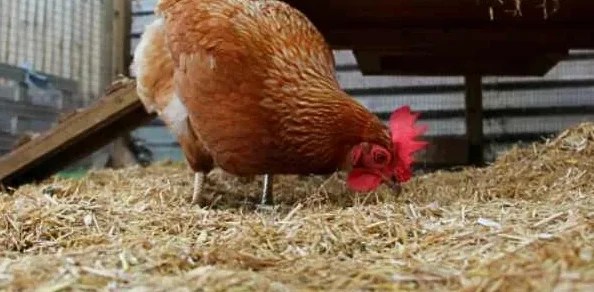
You can use a cat litter scoop to clean easily and quickly. It only takes me 10 minutes every morning to do my coop and run. I use a poop board under my roost with Sweet PDZ in it. No flies anywhere. All other bedding holds moisture and breeds bacteria and sticks to feces. Anything that holds moisture is the enemy of your chickens, moisture causes respiratory infections. Hay and straw can cause crop impaction. Deep bedding method shouldn’t be used with chickens because again it holds moisture and chickens scratch which puts all the bacteria in the air. My run is covered by a roof and the food and water are kept there. A Grandpa’s treadle feeder makes sure there’s no food on the ground to attract rodents and nipple drinker bucket keeps the area dry and water clean.
Regarding Coop Ventilation
OK, there’s a few super important things about chickens in winter
1) Ventilation is the most important consideration in coops. It is more important than temperature. Chickens die in unventilated coops at 40 degrees, but thrive in ventilated coops at -25 degrees.
2) Ventilation is not the same thing as drafts. Drafts also kill birds. Drafts are typically the air that rushes through cracks in the bottoms or sides of coops below or at the level of the roosts, directly affecting the bird. Ventilation is what allows the stale air to leave the coop out the side windows above the roosts, at least 1 ft above their heads. Most pre-fab coops have very poor ventilation unless modified. Back centuries ago, when people carried candles and lanterns for light instead of flashlights, a draft was considered too severe if the lantern flame flickered from the air movement.
3) Frostbite is usually caused by frozen condensation that accumulates on the comb/waddles/feet. If the air is very dry, chickens can tolerate much lower temperatures. Designing their roost with a poop tray below it, filled with sweet PDZ, then using a cat litter scoop to remove those moist droppings every day will go a long ways towards keeping the coop air dry and avoiding frostbite.
4) Be sure that the roosts are wide enough that the chickens can’t wrap their feet around them. The classic example is a 2X4 board. When placed such that the narrow edges are in the dorsal and ventral positions and the wide edges are in the lateral positions, the toes drape over the edge of the roost, out of the birds feather cover when roosting, and the toes freeze off. When the 2X4 is placed such that a wide edge is in the dorsal position, the bird’s toes don’t drape over the roost and are kept warm by her fluff. Unfortunately, most pre-fab chicken coops use 2X2 roosts, which are completely wrong for full sized hens, leading to an increased risk of frostbite, and also leading to a higher percentage of birds with bumblefoot because the pressure from the roost is only distributed over a small area of the foot.
5) Do you have an extra stall, or even an extra spot in a loafing shed? Putting a coop inside a covered stall, with excellent ventilation but protected from wind, will often keep chickens quite comfortable.6) If it’s super cold there, insulation of the walls will help keep them warm without creating increased moisture or blocking ventilation. Don’t block ventilation as an alternative to wall insulation.
7) Here is a coop that I built with good ventilation. (Not the best picture, sorry.) Note that there are 8″ of predator proof ventilation around the entire periphery of the walls, and it is well above the heads of any roosting birds. The front doors can be totally closed, left totally open, or removed and leaned up against the front frame to allow extra air circulation (the front doors are not attached in this picture so that the inside can be seen). This coop sits inside a covered run that has wire walls, and the walls have tarps attached from the floor up to within 16-18″ of the ceiling in the winter, so there is no wind and it is relatively warm in the covered run, and honestly quite toasty inside the coop during the winter. I am in western WA, so we only see lows of 8-22 degrees overnight, depending on the year — much warmer than where you are. If my temps were significantly lower, the coop would be insulated, I would have a poop board for daily cleaning, and there would be more wind breaks.
***No water in the coop!
**The Vet Corner groups encourage members to establish a relationship with their local veterinarian, don’t wait until an emergency.**
© 2014-2025 Rural Veterinary Outreach. All Rights Reserved.
 RVO Vet Corner Files