By Elena Johnson – CVC AC
Here is a link explaining all things feather loss: The Avice Hub – Feather Loss
It is important to make sure your chickens are naturally molting and not infested with mites or lice so make sure to check under the wings and near the vent for parasites.
You can find our Mites file here.
You can find our Lice file here.
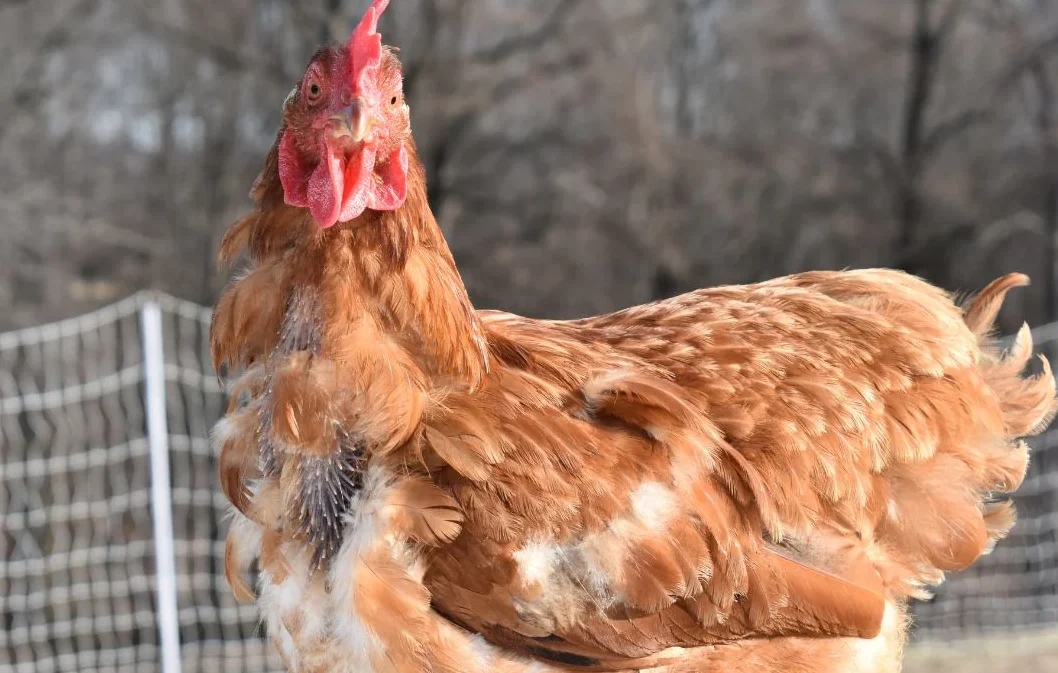
When most chickens molt, it starts at the head and neck, then down the back, breast, wings and tail is last.
The symptoms of molting are as follows:
*Thin Appearance due to lack of feathers.
*Droopy Appearance because as they start to molt, feathers become weak, break and look droopy.
*Lack of Feathers, especially if they are molting due to other reasons other than genetics. At first you will notice it on the wings and tail because they are more visible body parts.
*All over color change, some get lighter some get darker.
*Weakness, when they molt they are less active. Their bodies are trying to shut down all systems except those needed for essential life support such as breathing and circulation. Molting can last one month up to six months, depending on the breed and why they started molting, ie: Normal molt, nutrition, illnesses.
*Chickens normally start molting in late summer or early fall which can last up to 6 months.
*Don’t over feed during the molt which can cause obesity.
*Do supplement with Vitamin A, D3, E and B which can be put in their water in the form of Poultry Cell for 2-4 weeks.
Chickens go through an annual molt; it is usually 7-8 weeks long but can be anywhere from 4 to 12 weeks. Juveniles molt twice before they’re one year old.
1st molt 6-8 days old, complete around 4 weeks, this is when they lose their baby fluff.
2nd 7-12 weeks old, at this time roosters get their distinguishing feathers, long neck feathers, long saddle feathers and sickle, tail feathers.
Annual molt starts around 16-18 months old.
Pin feathers are covered by a waxy coating called Epitrichium, this protects the blood engorged new growth from breaking and bleeding, once the feather is grown out, and the blood leaves the tube, the casing falls off and it is now called a quill. Pin feathers are very painful so no handling unless absolutely necessary when they are molting.
During the molt, egg production slows or even stops due to the amount of protein needed to make new feathers. Their combs will also appear pale but will return to bright red after the molt. Feathers are 85% protein, switching their layer feed to Feather Fixer or Flock Raiser for 4-8 weeks will help boost the protein needed to grow new feathers.
Molting is triggered by a change in the amount of daily light but can also happen if there is a lack of food and water. Broody hens will go through a hard molt after hatching eggs because they return to normal eating and drinking.
You don’t want to provide extra protein in large amounts, this is why the above food change is much better than adding large amounts of meal worms or other high protein foods, excess protein can cause diarrhea, and in chicks it is converted into uric acid and deposited as crystals in the joints causing gout.
High protein over long periods of time can damage the liver and kidneys also.
Make sure your chickens also have access to oyster shell at all times in a separate feeder, especially when switching off layer feed to Feather Fixer or Flock Raiser as it does Not contain the same amount of calcium. And oyster shell is the only calcium that is slow-release, the calcium in their feed is fast-release.
Chickens with damaged or missing feathers from rooster over mating or parasites may not get their feathers back until the end of summer-fall molt. Hen saddles work well for mating feather loss to protect the back and wings. Keep those rooster spurs trimmed and have Kwik stop on hand if you go too short and cause bleeding. Retired avian vet tech and 30 years of chickens, CVC AC
Sources:
The Chicken Health Handbook, Gail Damerow pgs 27-28
Chickens Moulting: Symptoms, Diet & Care
Kwik Stop Kwik Stop in Amazon
**There is not affiliation from Vet corner to these Amazon shops.
**The Vet Corner groups encourage members to establish a relationship with their local veterinarian, don’t wait until an emergency.**
© 2014-2025 Rural Veterinary Outreach. All Rights Reserved.
 RVO Vet Corner Files