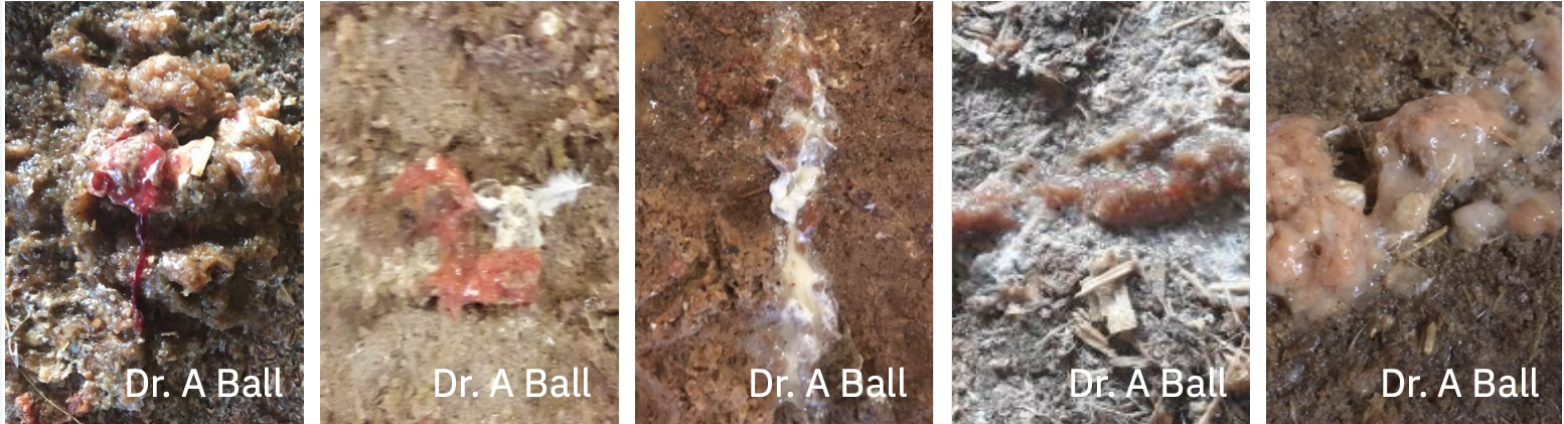
1- Normal fecal droppings:
Intestinal Droppings: voided as digestive waste with white uric acid crystals on the outer surface.
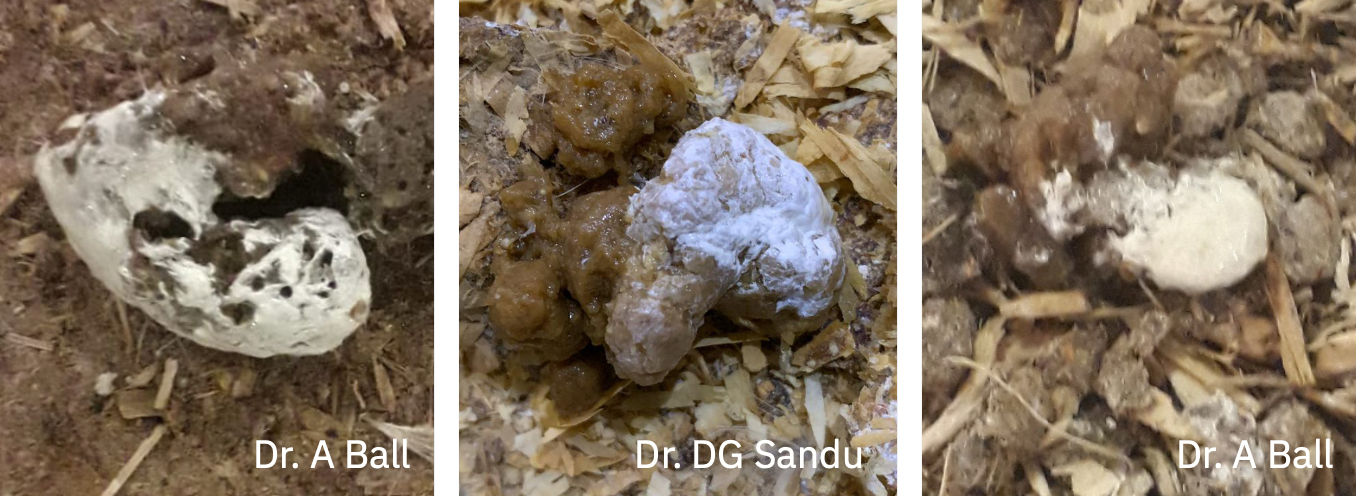
Cecal Droppings: Normally expelled 2 or 3 times a day (one every 8 to 10 droppings). May look pasty, smell worse than intestinal droppings and are often light to dark brown in color.
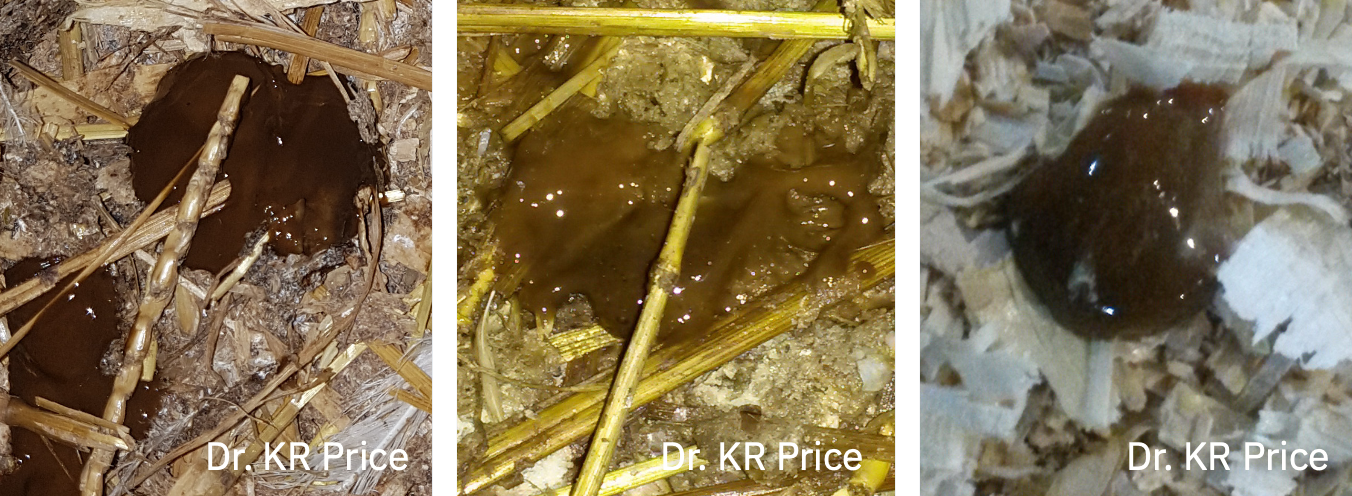
2- Abnormal Cecal Droppings:
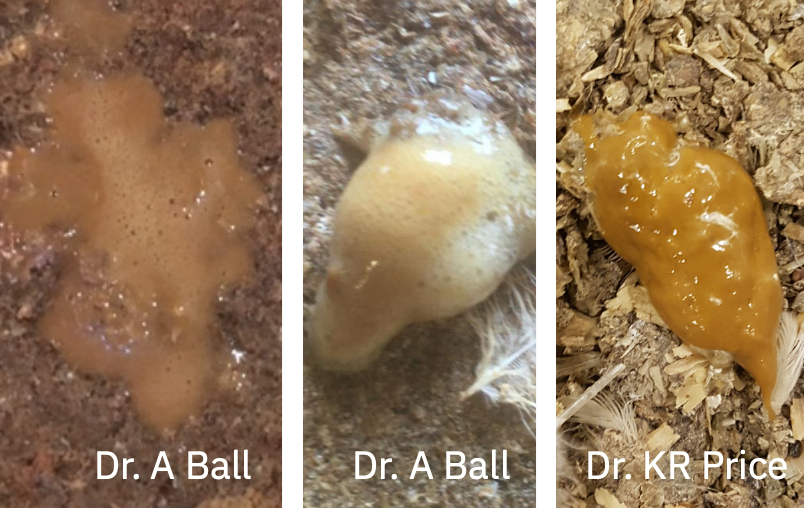
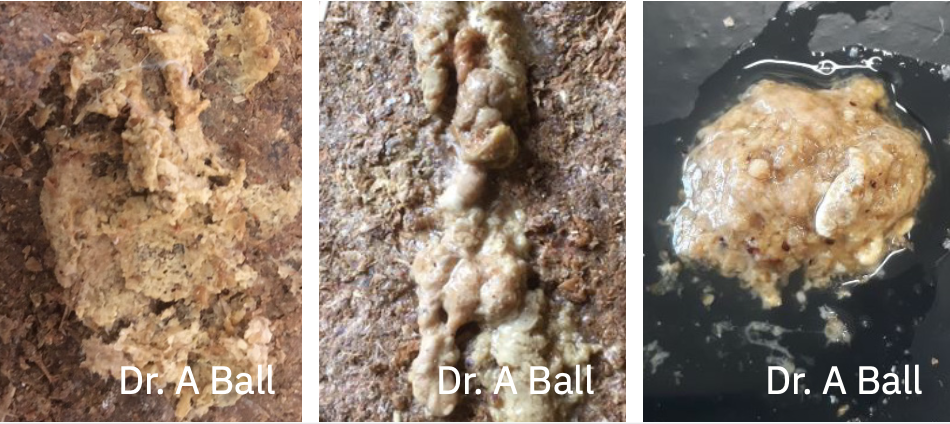
Foamy:
- Caramel, light brown or brown: watery and foamy droppings. Potential causes: viral infection like adenovirus, dietary changes, feed ingredients that were not properly digested, bacterial infection like necrotic enteritis, parasitic infection or dysbacteriosis.
- Yellow: may be blood stained. Potential causes: blackhead, viral infection, dietary changes, bacterial infection, microbial imbalance.
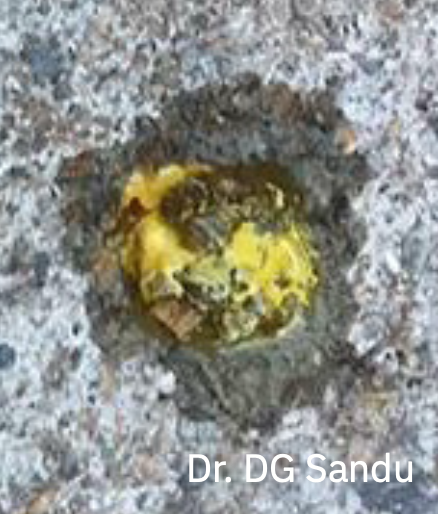
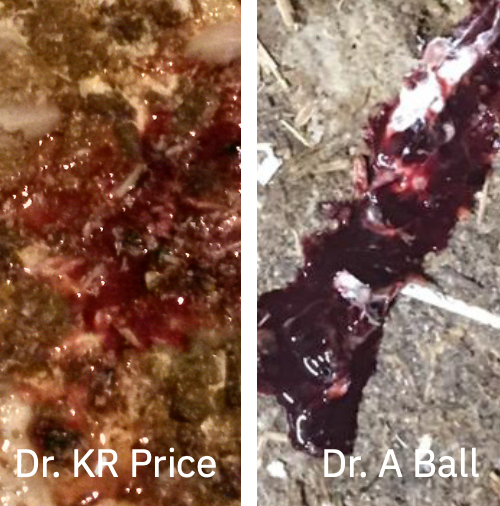
- Red: bloody, light to dark red, can be sticky or loose. Potential cause: cecal coccidiosis.
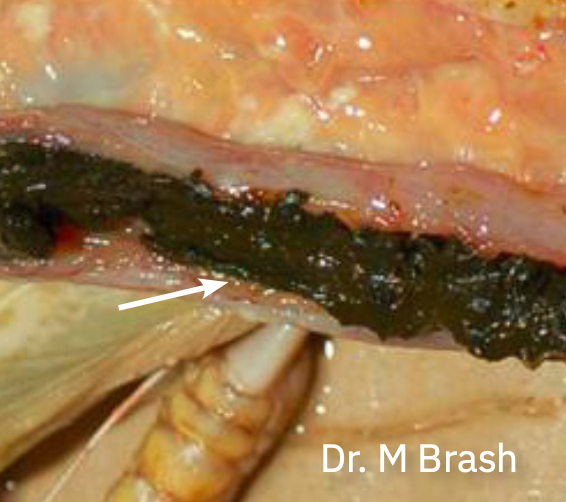
Worms: small (less than 1cm) think worms can take on the color of the dropping. Dropping appears light to dark in color, and has a loose to sticky texture. Appears almost bumpy with worms. Potential cause: cecal worm.
3- Abnormal Intestinal Droppings:
Loose droppings:
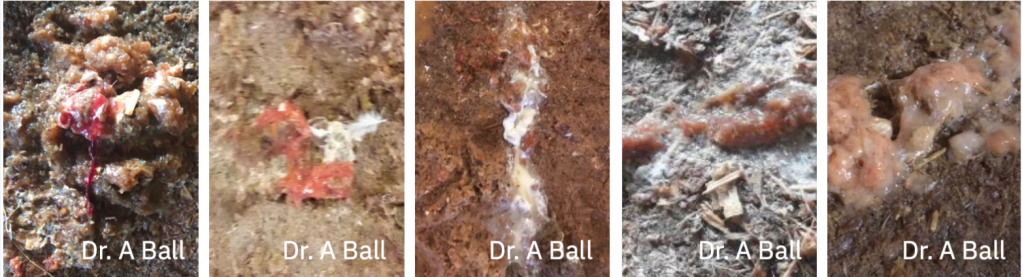
- Mucus: medium to high mucus content that appears sticky and shiny. It can be the intestinal mucus lining normally (low mucus content) or abnormally (medium to high mucus content) falling off and being excreted. White urates may be found. Potential causes: gastrointestinal tract disease (coccidia, scarids, necrotic enteritis, salmonella), dysbacteriosis (microbial imbalances), mycotoxins, toxic injuries (rancid fats) or feed management issues (extended feed withdrawal).
- Fluid: clear watery droppings, normal intestinal droppings with more fluid around the feces or only watery feces. White urates may or may not be present. Potential causes: malabsorption syndrome (viruses, mycotoxins), dietary changes (excess magnesium, non-starch carbs), intestinal challenges, increased water consumption, stress (vaccination, environmental temperature).

Coarse Texture: Undigested feed can be seen in feces. Potential causes: gizzard erosion, viral/bacterial/parasitic infection, malabsorption syndrome, mycotoxins, stressors, dietary changes, rancid fats, poor feed quality, particle size of grinded grains.
Parasitic worms:
- Tapeworms: small white segments, ball-looking structures and/or long ribbon-shaped worms may be found. The intestinal feces may be normally formed or watery/mucus like.

- Roundworm: medium to long round string-like worms may be found in the intestinal feces. The color of the worm may be white to off-white. If severely infected, the feces may be watery.

Changes in color:
- Green: greenish droppings combined with very little fecal matter and condensed urates, which contains little mucus around it. Potential causes: systemic disease (coli infection, newcastle disease, avian influenza, ALV LL), liver malfunction, abnormal bile secretion (fatty liver) or bird not eating due to infection/stress.
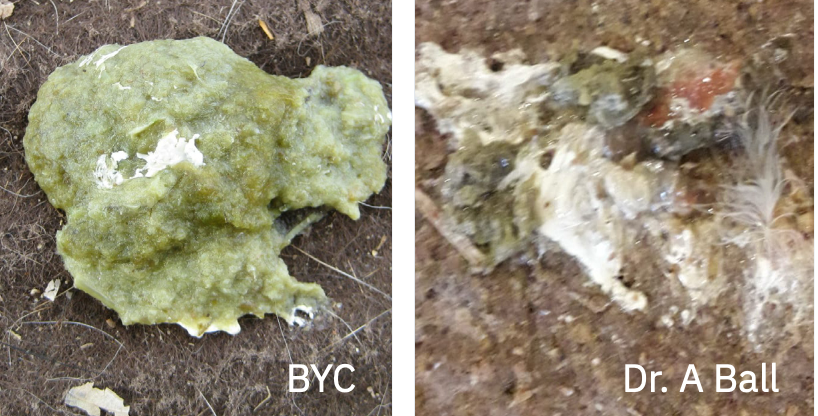
- Orange/red: the color may be due to an increased level of intestinal cell sloughing and/or mucus.

- White:
- Polyuric droppings: contains large amounts of white urates in the excreta. Often mixed with brown droppings.

- White Urates: when only the white urates are being passed.

Potential causes for both: kidney disease, viral infection (infectious bronchitis) or bacterial infections, immune disease (ALV LL), moldy ingredients (mycotoxins), overused drugs, heavy metals not absorbed or digested, dietary changes, behavioral changes, worms, coccidiosis or toxoplasmosis.
**The Vet Corner groups encourage members to establish a relationship with their local veterinarian, don’t wait until an emergency.**
© 2014-2025 Rural Veterinary Outreach. All Rights Reserved.
 RVO Vet Corner Files
You must be logged in to post a comment.