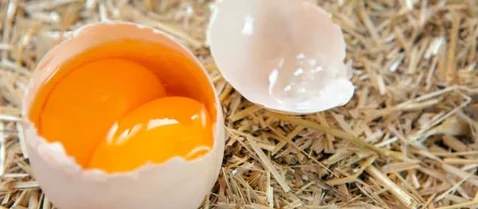
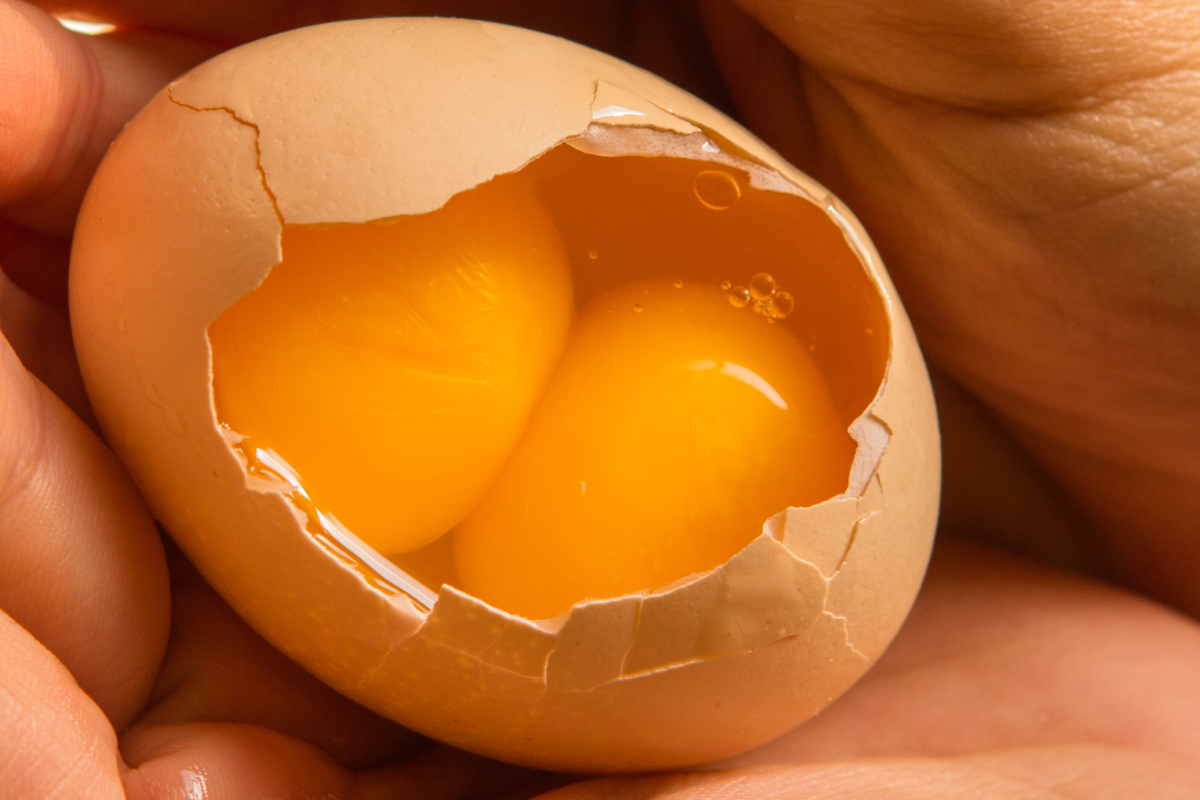
1. Multiple and double yolk: 2, 3 or more yolks within one egg. It’s caused by rapid ovulation or a reproductive cycle that is not in sync. Could be the contents of more than one egg, or twin yolks as part of a pair. Most common in young hens just starting to lay, or older hens that lay a lot fewer eggs.
2. No yolk eggs: Fairy eggs, oops eggs, fart eggs, etc. If it has a small meat spot, it’s a piece of reproductive tissue that was treated as a yolk by the oviduct. Also common in young pullets first eggs or old chickens at the end of their laying cicles.

3. Undersized or tiny eggs: just like the 2 above, they’re usually just a result of young pellets’ first efforts at laying – though it can also be caused by stress. They tend to be mostly yolk.

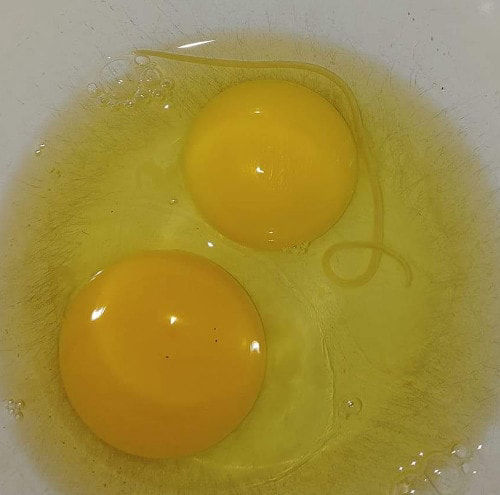
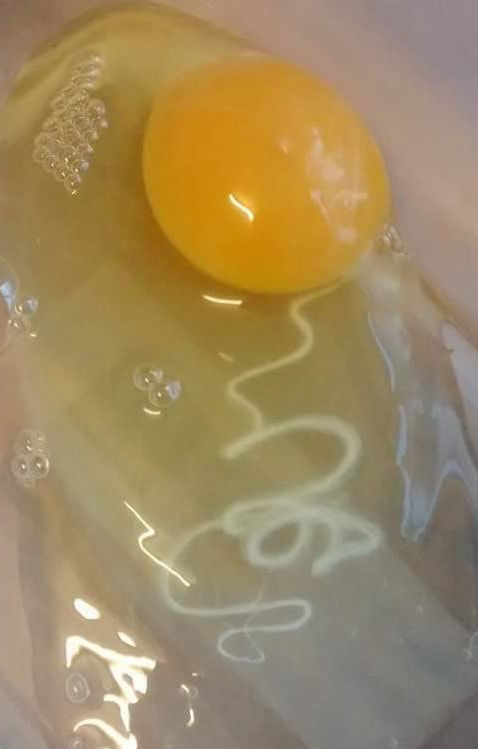
4. Worm infested eggs: a small, thin roundworm can be found in the yolk or egg white. Cause is usually a roundworm that migrated to the oviduct. It may happen in hens with a high parasite load. Doesn’t happen a lot as often hens with lots of parasites will stop laying.
Most times a malformed chalazae will be confused with a worm – this is a twisted protein fibre that is part of the egg and can come out straight. This chalazae supports the yolk in the centre of the shell. Treatment for this is deworming, although it’s best to have a fecal test to determine the type of parasites for a proper deworming. State labs should be able to help with this.
5. Runny egg white: the egg white is thin and watery and spreads out over a large space when the egg is cracked open. Can be caused by eggs stored for a long time, high storage temperature with low humidity, rough egg handling, bird age, infectious bronchitis, egg drop syndrome, mycotoxins, ammonia or genetic components.
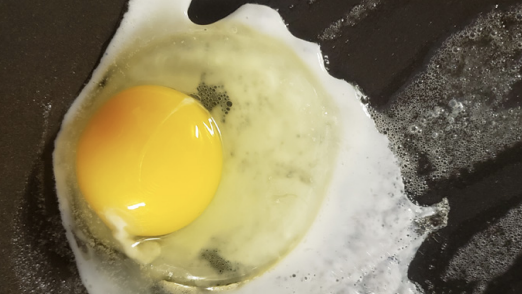
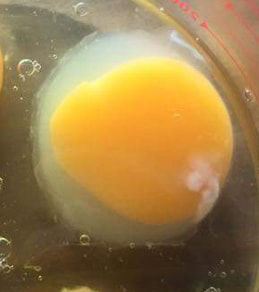
6. Meat spots: it’s a piece of tissue from the oviduct. Usually brown/grey-tinged; can be small or large. Can be caused by bird age, stress, mold ingestion, too many light hours.

7. Blood spot: happens when there’s a red spot in the egg yolk, small or large. Sometimes the egg white can be blood red with a yellow yolk, or a blood-spot in the yolk. Possible causes: insufficient vitamin A or K, excessive amount of Lucerne meal, mold ingestions, too many light hours, stress, avian encephalomyelitis.


8. Discolored egg whites: when the egg whites are cloudy or darken to a yellow/green/pink hue. Possible causes: excess riboflavin, cottonseed meal and oil, aging of eggs, poor egg storage, hairworm, marshmallow weed/plant.

9. Discolored egg yolk: can be red, green or blue hued yolks. Can be caused by the chicken ingesting something they shouldn’t have. For example ethylene glycol (car radiator antifreeze) can cause odd colored eggs. Can also be a large amount of sees oils in diet.
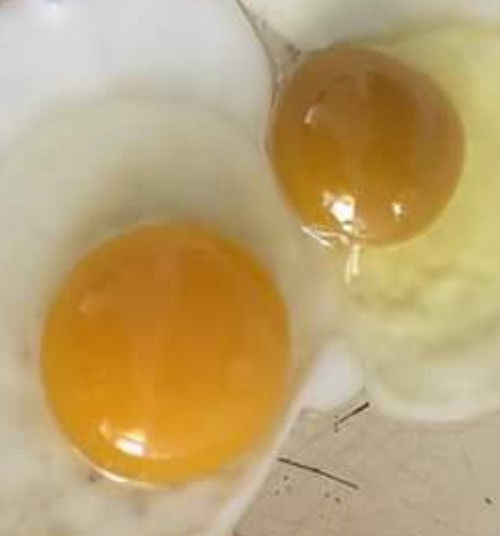
10. Green tinted eggs (yolk or white): yolk or white can be dark green or olive color. Possible causes: cottonseed oil, shepherd’s weed/plant, marshmallow weed/plant, excess riboflavin.

11. Platinum white/blonde yolk: the yolk is very opaque or white/blonde, but the egg white may be clear or cloudy. Possible cause: hairworm

12. Pale yolk: the yolk is pale yellow and the egg white is often clear. Possible causes: insufficient carotenoids, insufficient pigments, pigments not blended well in feed, feed or pigments not stored properly.
13. Mottled Yolk: yolk color is uneven or patchy, but the egg white is clear or cloudy. Possible causes: poor handling or storage of eggs, gossypol in cottonseed meal, tannic acid, raw soybean meal, worming drugs, Nicarbazin, stress, gallic acid, mineral and calcium deficiency.
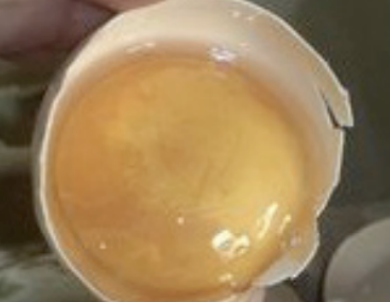
14. No membrane eggs: it’s caused by a failure of the selection of oviducts that lays down the protein fibre membranes, therefore only the yolk is laid.

15. Cloudy egg whites: usual in eggs that have just been laid, have not yet cooled. It’s gas in the egg white that still needs to diffuse from the air sac.
**The Vet Corner groups encourage members to establish a relationship with their local veterinarian, don’t wait until an emergency.**
© 2014-2025 Rural Veterinary Outreach. All Rights Reserved.
 RVO Vet Corner Files
You must be logged in to post a comment.