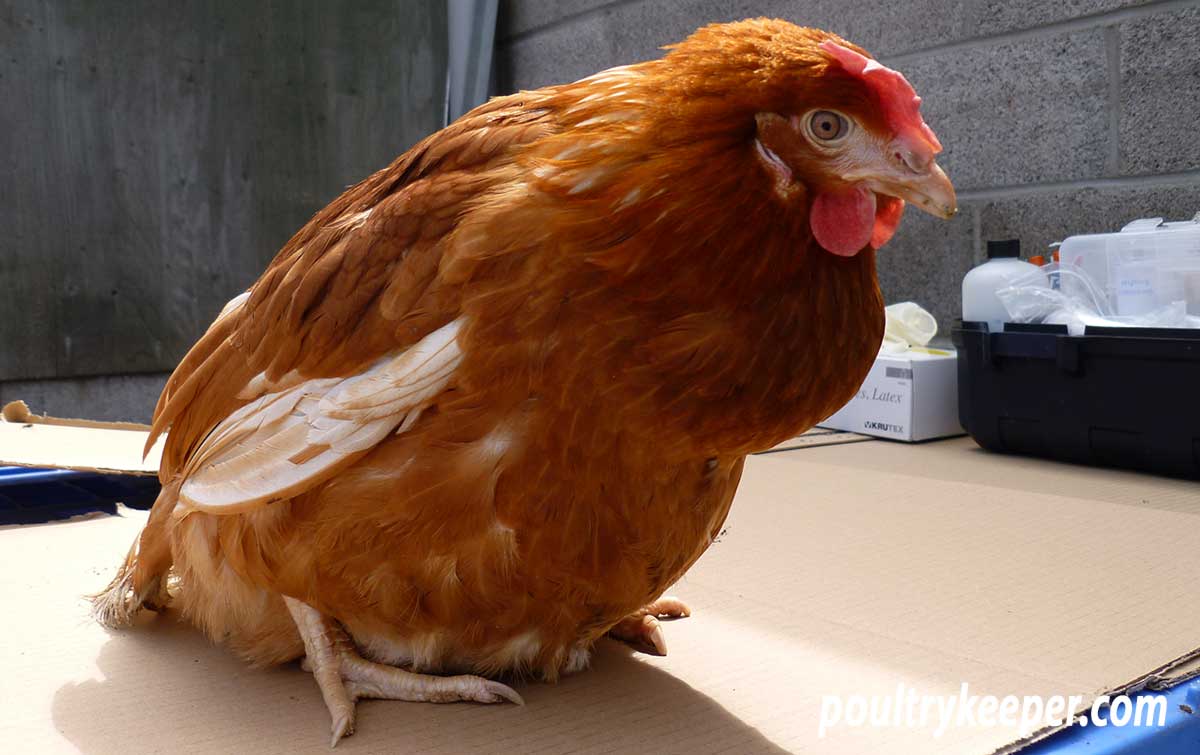
Egg-yolk peritonitis (EYP) is the inflammation of the coelom of a han as a response to yolk material deposited into the body cavity. Yolk is an excellent bacterial growth medium, which means that this can lead to disease such as Escherichia Coli.
EYP, complicated with bacterial infection, will most often lead to sporadic death in layer/breeding hens and is diagnosed via necropsy.
It’s important to determine the underlying cause, since it often occurs as a secondary or concurrent event to several reproductive conditions, including: Salpingitis, impacted oviduct, ovarian tumors and cystic ovarian disease.
Symptoms: Hens will stop laying as many eggs as possible, if any at all. The eggs laid tend to be soft or thin-shelled, or with any deformities. Hens will also be less active and may spend more time than usual sitting without laying an egg. They can be mistaken as being “broody”. They will often position themselves in “penguin” stance to attempt to relieve some discomfort, and may have difficulty breathing.
Diagnosis: Palpitation of the abdomen to determine if there’s eggs in the oviduct or free ectopic eggs in the abdomen. Abdominal fluid cytology, complete blood count, radiography and ultrasound are the best methods of diagnosis.
Treatment and prevention: Management of body weight, a healthy reproductive development and drinking water sanitation are the best preventatives. Antimicrobial treatment is often effective. In severe cases a vet may prescribe analgesics, anti-inflammatories, antibiotics and even surgery,

References: MSD Veterinary Manual, https://poultrydvm.com/condition/egg-peritonitis
**The Vet Corner groups encourage members to establish a relationship with their local veterinarian, don’t wait until an emergency.**
© 2014-2025 Rural Veterinary Outreach. All Rights Reserved.
 RVO Vet Corner Files
You must be logged in to post a comment.