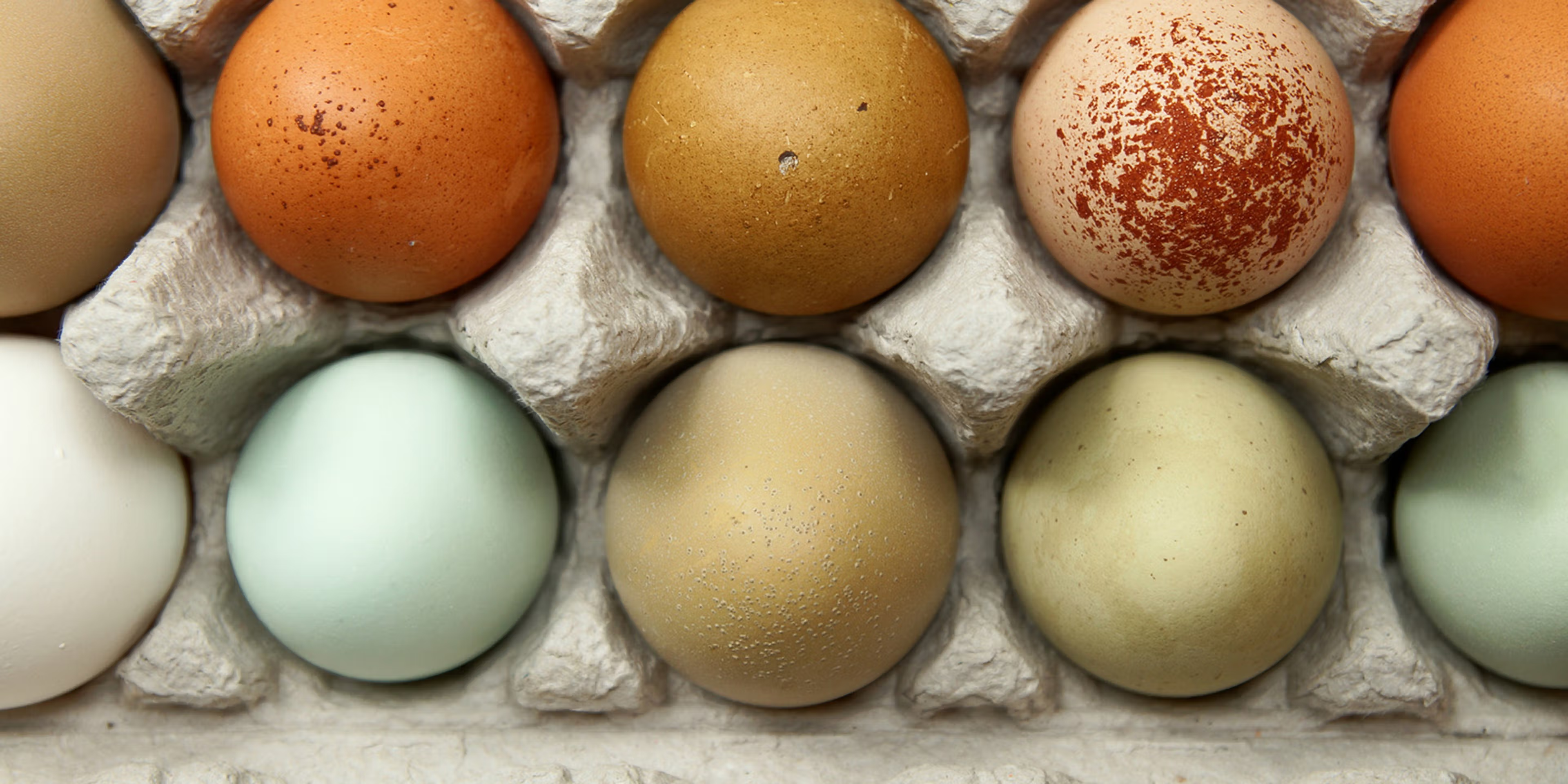
As you may know, egg production may result in some odd–looking eggs. It’s often a topic in CVC, let’s go into some of the most common egg oddities in poultry eggs and can hopefully help with your concerns. Some of these deviations may impact egg quality and result in eggs that should be discarded. It takes a chicken approximately 24–26 hr to complete the egg laying process, from the release of the yolk from the ovary to the actual laying of the egg.
Shell–less Eggs
These eggs do not have a shell. Instead, the interior contents of the egg (i.e., yolk and albumin) are protected only by the shell membranes.
Cause: immature shell gland, diseases such as avian influenza, Newcastle disease, infectious bronchitis, and egg drop syndrome ’76. It also may happen if the bird’s diet is deficient in calcium, phosphorus, manganese, or vitamin D3.

Soft–Shelled Eggs
Generally occurs when an egg is prematurely laid, and insufficient time in the uterus prevents the deposit of the shell, so only a thin layer of calcium is deposited onto the shell membrane. It may cave to the touch.
Causes: More likely to be observed in older hens. Excessive phosphorus in the diet, moldy feed, saline water, or feed contaminated with mycotoxins.
To read more about soft-shelled eggs, please click here.

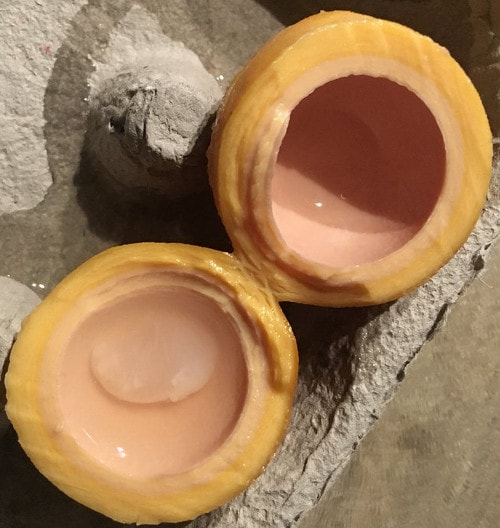
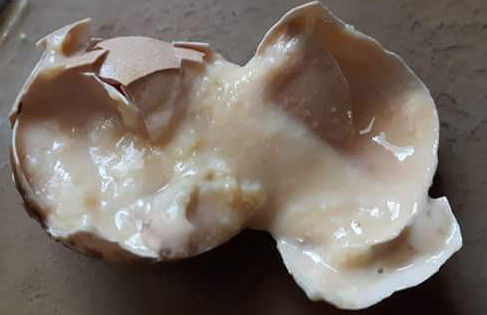
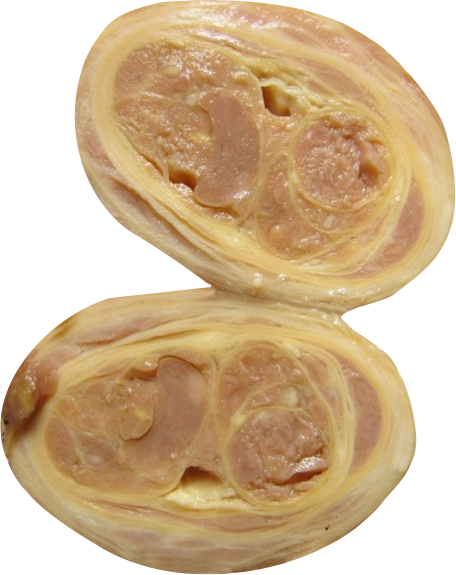
Lash egg (Salpingitis).
Salpingitis is an inflammation of the oviduct, which may contain liquid or caseous exudate. It is considered a serious reproductive-related emergency. They are formed as exudes and pus form the infection that is passed on to the oviducts. It is a frequent lesion in female broilers and ducks at processing. SHOULD NOT be eaten or handled without gloves.
Causes: It can be of bacterial or viral origin. It is often caused by mycoplasma gallisepticum, escherichia coli, salmonella spp or pasteurella multocida (fowl cholera) infection.
To read more about Lash Eggs, please here.
Calcium Coated Eggs.
Happens when an extra layer of calcium can be seen either all over the egg or on one end.
Causes: A defective shell gland, disturbances during calcification or excess calcium in the diet.

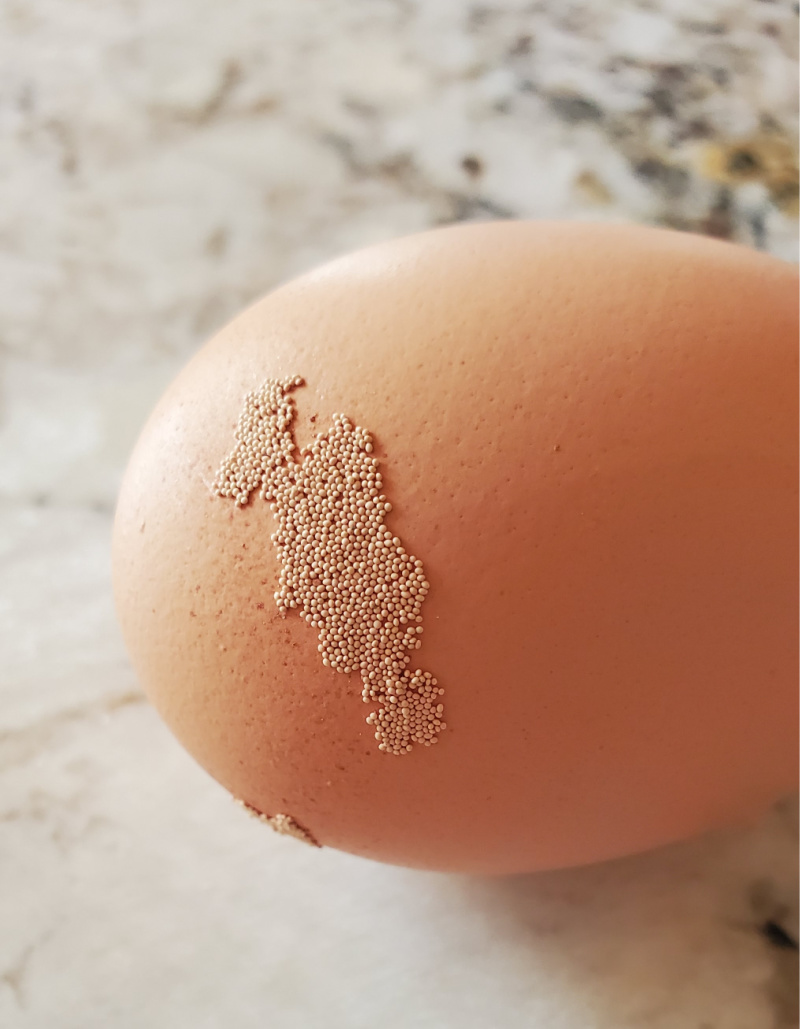
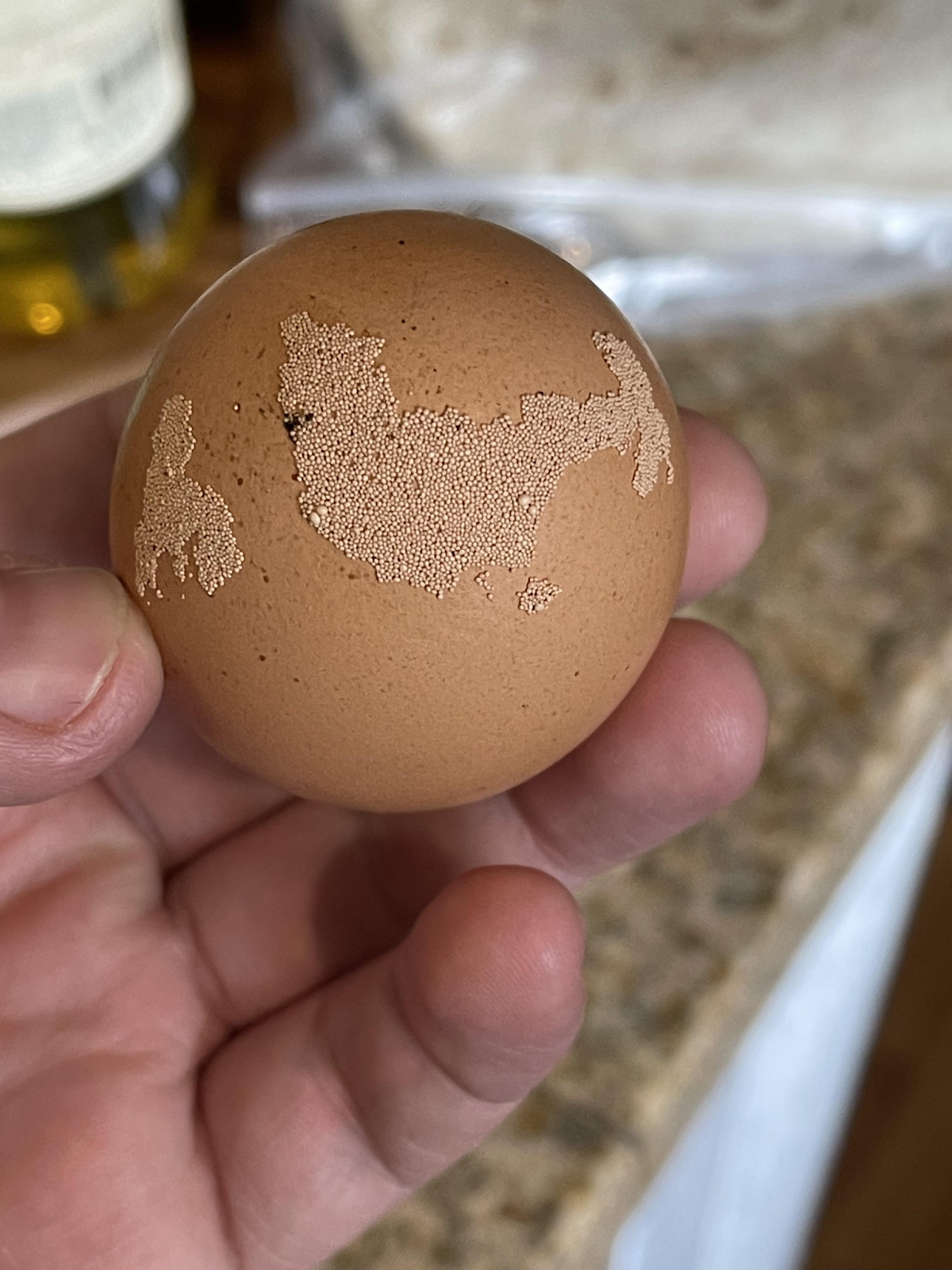
Calcium Deposits
Eggs with calcium deposits will have white, irregularly shaped spots on the external surface of the shell.
Causes: The shell gland is defective, disturbances during the calcification process of the egg formation or too much calcium and/or vitamin D in the diet. The size of the calcium deposit determines whether excess calcium affects eggshell quality.
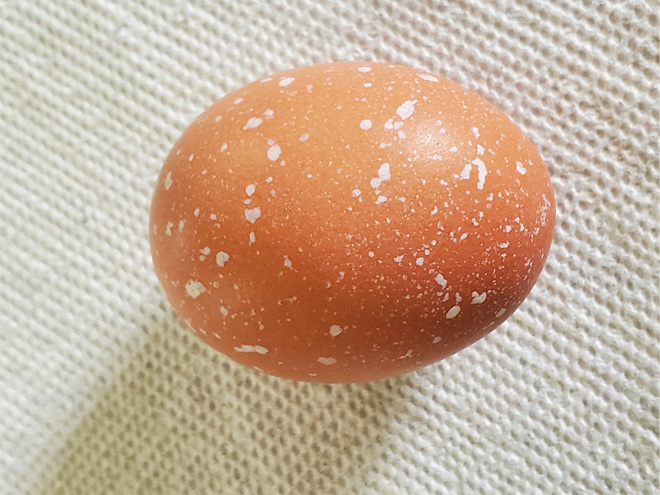
Speckled Eggs (White or brown)
Abnormally speckled eggs have smaller speckles than calcium deposits, the deposits are laid down before the formation of the cuticle, which is the last layer of the egg. This process occurs in the shell gland.
Causes: If the shell gland is defective, disturbances during the calcification process of egg formation or excess calcium in a hen’s diet. Does not negatively affect the quality of the egg.

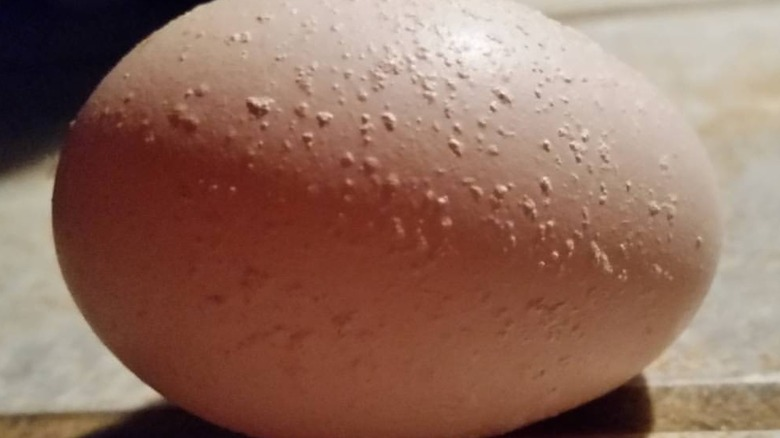
Pimpled Eggs
These eggs have small, raised lumps of calcium on the shell and feel rough and sandpaper–like to the touch. The severity of the pimples depends on the amount of foreign material present during calcification.
Causes: The age of the bird, the strain of the bird or inadequate nutrition.
Slab–sided Eggs
Occurs when a second egg enters the shell gland before the first egg leaves. The second egg enters the shell gland pouch when the first one is not yet fully calcified, and flattens the first egg when they make contact.
Causes: Changes in the chicken house lighting, stress or diseases.

White banded eggs.
A white band/halo is seen in the shell of the egg.
Causes: when 2 eggs touch in the shell gland pouch, excess calcium can be deposited in the first egg. The other will have the slab egg mentioned above.
Cracked Eggs
These eggs have large cracks, star cracks or hairline cracks that sometimes result in holes in the shell; these holes can cause the contents of the egg to leak.
Causes: Bird age (older), younger glock with saline water, calcium or Vitamin D deficiency, mycotoxins (especially zearalenone) in the diet or heat stress.


Mottled Eggs
When the shell does not dry out quickly enough, the egg will have areas that are translucent or glass-like.
Causes: overcrowding, manganese deficiency, high humidity in the shed, mycotoxins or diseases.

Wrinkled Eggs
Eggs with thin creases, ridges or wrinkled surfaces.
Causes: Overcrowding, stress, defective shell gland or infectious bronchitis.
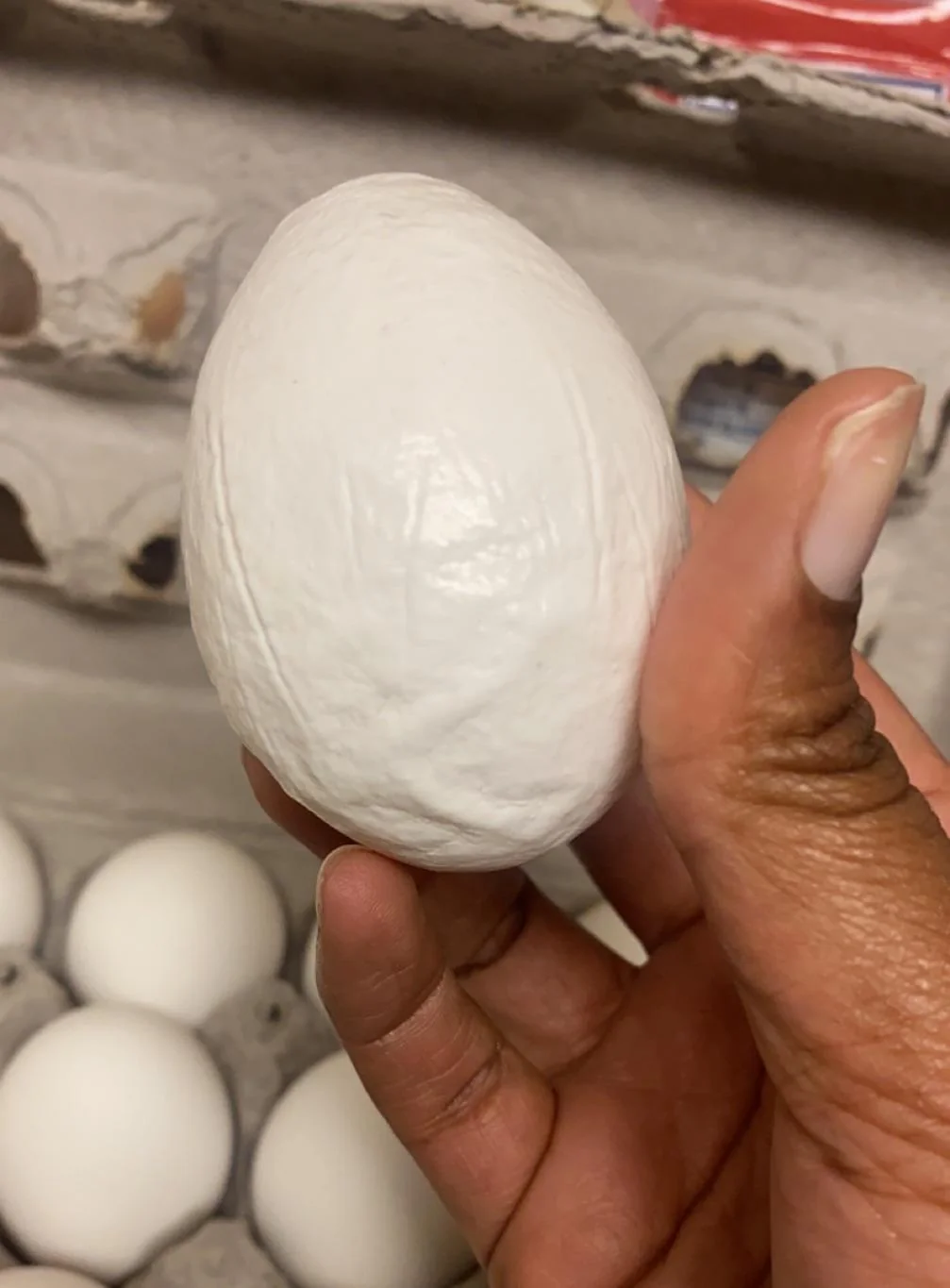
Corrugated Eggs
These eggs have a very rough, corrugated-looking surface and are produced when plumping is not controlled and terminated prematurely.
Causes: Bird age (older), heat stress, saline waiter, lack of calcium and Vitamin D3, mycotoxins.

Dirty Eggs.
These are stained by feces when the flock has wet, pasty droppings, therefore avoid feeding ingredients that cause these.
Causes: Wet droppings, indigestible compounds in the feed, poor gut health, electrolyte imbalance or saline water. Foods like: cassava, wheat, barley or rye.

Bloodstained Eggs
As the name says it, these are eggs that are stained by blood.
Causes: overweight pullets, sudden increases in day length, pullets coming into lay, poor hygiene, belt pick-up system.

Pale-shelled eggs.
The degree of brown color in the egg shell is determined by the quality of deposited pigment in the cuticle. Abnormalities occur when there’s sudden change in the shell color.
Causes Infectious bronchitis, bird age (older), stress, Egg Drop Syndrome ’76, use of chemotherapeutic agents (sulfonamides and nicarbazin)
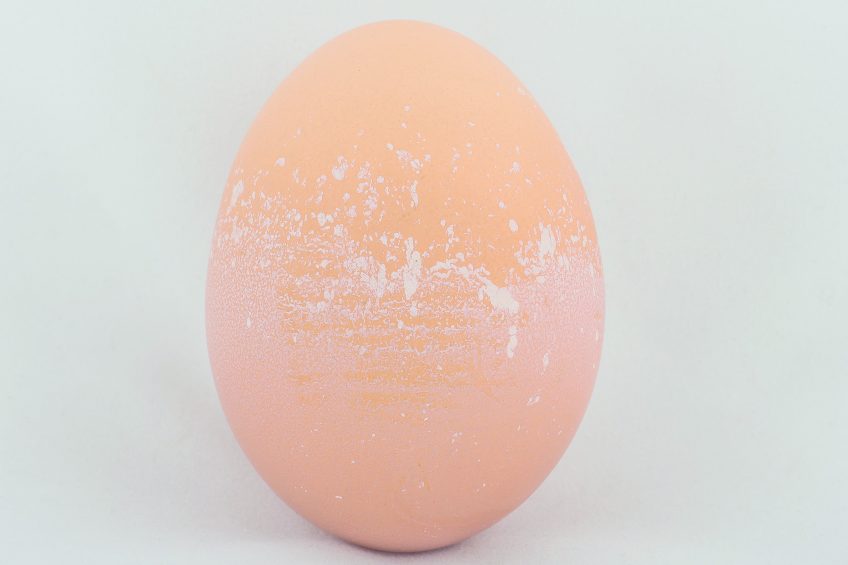
Pink or lilac eggs with excess bloom
There will be a sudden change and the egg will appear pink or lila due to a thick layer of cuticle or bloom laid on the shell.
Causes: Stress, excess calcium.
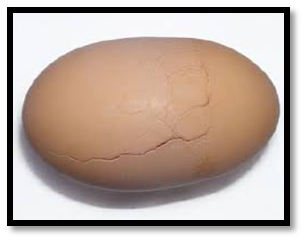
Broken and Mended Eggs
A diagonal break occurs during formation and is mended again before lay.
Causes: Stress during calcification
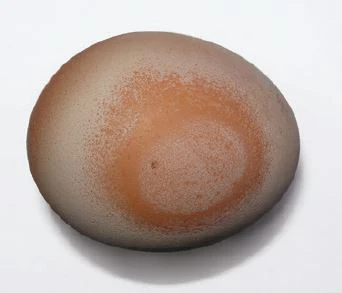
Misshapen eggs.
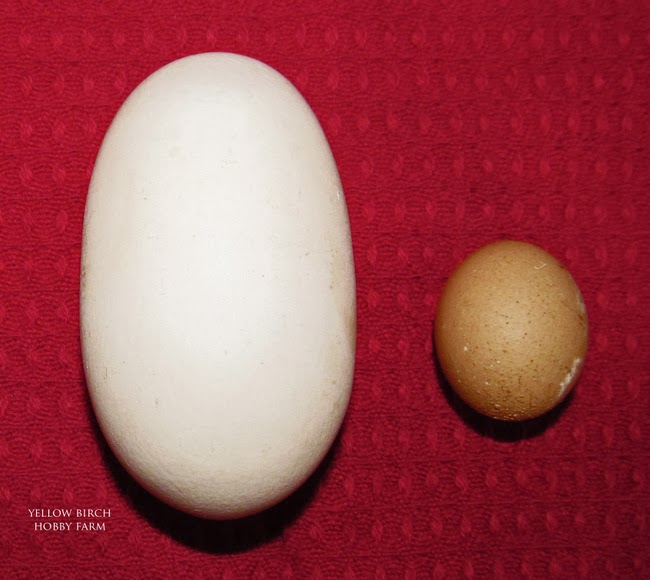
These are eggs that are just not your regular, perfectly oval egg. So too small or large, round instead of oval, or differ from normal shapes.
Causes: Immature shell gland, Avian Influenza, NDV, infectious bronchitis, Egg Drop Syndrome 76, Stress, Overcrowding.
Tubes or curly shell ends.
Eggs with a curl at one end, either a short raised lump or a 3-inch long curly tube that looks like a tail. Often laid with flaky shells.
Causes: Stress, defective shell gland, sudden changes in day length, Egg Drop Syndrome 76.

Joined eggs.
Happens when 2 eggs are joined by a tube. One or both may have a soft or missing shell.
Causes: When 2 eggs come together in the oviduct.

**The Vet Corner groups encourage members to establish a relationship with their local veterinarian, don’t wait until an emergency.**
© 2014-2025 Rural Veterinary Outreach. All Rights Reserved.
 RVO Vet Corner Files
You must be logged in to post a comment.