Canker is an infection caused by protozoan parasites and characterized by caseous oral accumulation, raised caseous lesions in the upper digestive tract and weight loss. The protozoa live in the sinuses, mout, throat, esophagus, liver and other organs.
The organism is fragile in the environment and transmission occurs through contact with infected oral secretions or water contaminated by these. It’s believed that turkeys and chickens contract the disease after consuming stagnant surface water containing Trichomonas gallinae.
Prevention: Parasites have been known to survive from 2 to 24 hours in distilled water. Contaminated waterers or outdoor birdbath contribute to transmission. First step is ensuring adequate cleaning of these.
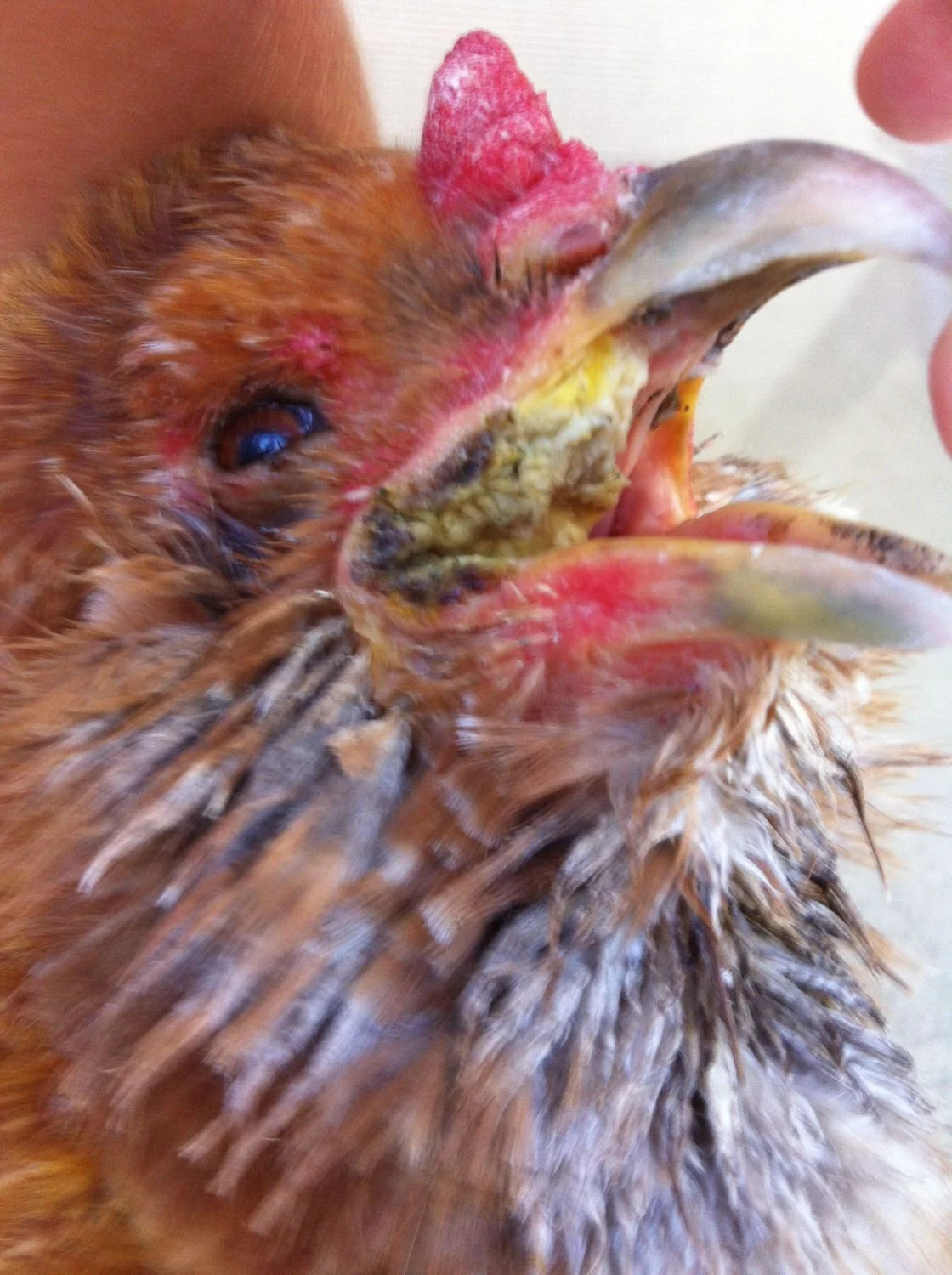
First lesions may appear as small, yellowish areas in the oral mucosa but grow rapidly to form masses that will block the esophagus, accompanied with watery ocular discharge and even exudate around the eyes, resulting in blindness. Birds will lose weight rapidly, becoming weak and listless.
Lesions:
Esophagus and crop: may be yellow, rounded, raised areas with a central conical caseous spur (yellow buttons).
Crop: may be covered in yellowish diphtheritic membrane that may extend to the proventriculus.
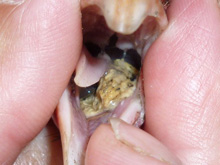
Diagnosis: Yellow plaques or raised cheesy masses in the upper digestive tract are very suggestive of the diagnosis. Masses are often large and either conical or pyramidal. Most extensive in the mouth, pharynx and esophagus. Birds will have difficulty closing their mouths.
For Turkeys, lesions are frequently only found in the crop and upper or lower esophagus. Infected turkeys will have a gaunt appearance with a hollowed area over the crop. Swallowing movements are apparent and may have an unpleasant odor (sour crop).
Morbidity and mortality can be quite high.
Control: Separate from the glock any infected birds and suspected carriers. Add no birds to an established flock since they may be carriers. Provide a source of clean, fresh water and replace it constantly. Eliminate all sources of stagnant water. Disinfect watering containers and water lines regularly with chlorine.
Treatment: There is no current approved medication for treatment in food animals. With a Q-tip try to GENTLY remove as much of the plaque as possible. Acidified Copper Sulfate in the water may help – however please make sure to read the instructions and dilute in the water as indicated, otherwise it can harm your flock, even lead to death.
PLEASE NOTE: Metronidazole, Ronidazole, Tinidazole and any -zole antiprotozoal medication. They are illegal to use in food producing species in the United States and carry a lifetime egg withdrawal if used. The FDA considers ALL poultry a food producing species, even if you consider them “pets”. This is PROHIBITED for both male and female birds of ALL food producing animals: chickens, ducks, geese, turkey, quail, Guineas and all other poultry classified birds.
Antibiotics cannot be prescribed to food-producing birds, extralabel drug use of these drugs is prohibited by the FDA.
Differentiating Canker from Thrush (candidiasis)
Thrush is a yeast infection in the oral cavity, esophagus and crop that causes lesions that look like patches of raised whitish dead epithelial debris. The top white pseudomembranes can be wiped off. Canker, while still on the same areas, is more a sticky, yellowish mass of caseous, necrotic material. Thrush is more likely to happen with prolonged antibiotic therapy, parasites or a stressful event, whereas Canker is passed through contaminated water or feed sources. Thrush can be treated with Nystatin or Copper Sulfate, Canker doesn’t have an approved treatment.
References: MSD Veterinary Manual, Avian Disease Manual: Seventh Edition, https://poultrydvm.com/condition/canker
**The Vet Corner groups encourage members to establish a relationship with their local veterinarian, don’t wait until an emergency.**
© 2014-2025 Rural Veterinary Outreach. All Rights Reserved.
 RVO Vet Corner Files
You must be logged in to post a comment.