Avian Leukosis (ALV) are leukaemia-like proliferative diseases caused by the avian leukosis virus. These are retrovirus-caused diseases.
- Lymphoid Leukosis: most common type of cancer. Affects chickens 4 months or older, and can affect liver, spleen and bursa of Fabricius. Characterized by a gradual onset in a flock and low mortality.
- Erythroid Leukosis: occurs in birds under 4 months old. It’s an intravascular leukemia and chickens are often anemic, with muscle hemorrhages, abdominal hemorrhage and ruptured liver.
- Myeloid Leukosis: can cause multiple masses on the chicken’s shanks, head and oral cavity, trachea and eye. Occurs mainly in adult chickens, but sometimes as young as 5 weeks of age.
- Avian Osteoporosis: or marble bone disease, alters the growth of osteoblasts which results in uniform diaphyseal or metaphyseal thickening in long bones and wings.
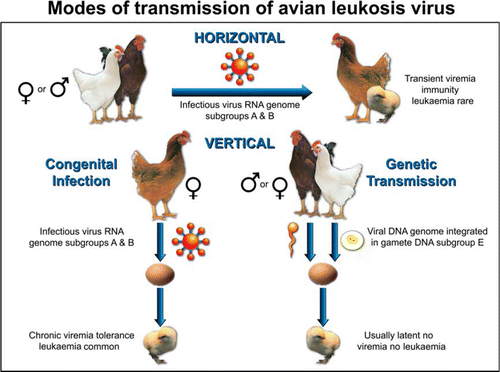
Transmission: mostly through egg transmission. Chicks hatched from infected eggs will be immune tolerant and won’t develop antibodies, have an increased risk of death, lay fewer eggs and will shed virus into their own eggs, perpetuating the infection. It can also happen via contact exposure, particularly with the ALV-J variant.
Symptoms: It will depend on the form of the disease, location of tumors and type of tumors. Some birds will have no clinical signs, and others may be emaciated with pale combs and wattles. An enlarged abdomen as a result of a massive enlarged liver. You may feel lumps in the bursa of Fabricius by insertion of a finger into the cloaca (with gloves). It can include loss of appetite, diarrhea, dehydration, weakness. Cyanotic comb may occur, occasionally.
Marek’s also causes tumors, however Marek’s primarily affects chickens under 4 months old, ALV often happens in chickens 4 months or older.
Diagnosis: Ideally, it will be diagnosed via virus isolation through samples of blood, plasma, serum, meconium, cloacal or vaginal swabs, oral washings, egg albumen, embryos or tumors. ELISA-ALV is the most commonly used, and histopathological diagnosis is essential for an accurate diagnosis.
Treatment: There is no effective treatment for ALV. There is also no vaccine that can protect against tumors and mortality. Congenitally infected chickens cannot be immunized. Eradication of the virus from breeding flocks is the most effective control method.
Some studies have shown good results when treating subgroup-J ALV with Baicalin extract (100-200 mg/kg of diet).


References: MSD Veterinary Manual, Avian Disease Manual: Seventh Edition, https://poultrydvm.com/pathogens/avian-leukosis-virus#:~:text=Avian%20leukosis%20virus%20(ALV)%20is,cause%20of%20outbreaks%20among%20flocks.
**The Vet Corner groups encourage members to establish a relationship with their local veterinarian, don’t wait until an emergency.**
© 2014-2025 Rural Veterinary Outreach. All Rights Reserved.
 RVO Vet Corner Files
You must be logged in to post a comment.