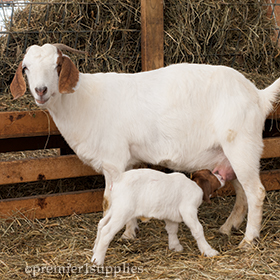
By Dr. Chastine – The Importance of Colostrum
In some cases, kids don’t get adequate colostrum – This can be a serious health hazard for the kid › Colostrum contains antibodies (proteins that fight disease) – Newborn kid’s immune system is naïve, hasn’t produced antibodies yet – Mom’s first milk (colostrum) contains these antibodies, especially if she has received a booster vaccination 30 days prior to her due date – Takes time for kid’s immune system to start producing the antibodies, so their body uses the antibodies from colostrum during the first few weeks of life – As kid’s immune system starts to function and produce antibodies, supply from colostrum is being depleted – Depletion of colostral antibodies typically occurs at around 6-8 weeks of age, at around the time we start vaccinating the kids (CD/T toxoid.
Colostrum is much thicker and stickier than normal milk, that is because of the antibodies that are present › The kid’s GI tract is designed to be able to absorb that sticky, thick substance with its large protein particles (antibodies) during the first 24-48 hours of life – The majority of colostrum is absorbed across the gut wall in the first several hours of life (within 12 hours typically is maximum absorption, and it tapers off over the next day or so) – Once the kid starts consuming the colostrum (or ANY thing at all), the GI tract begins to change what it can absorb – The ability of the lining of the GI tract to absorb large protein particles decreases with time and amount ingested – So, if anything other than colostrum is given during the first day of life, then the amount of colostrum that is able to be absorbed can be decreased considerably – If you have an orphaned kid, or one where amount of colostrum that can be given to the kid is very limited because of circumstances, you want ALL of it to be utilized, not wasted because it can’t be absorbed by a gut that was closed too early by other things given.
What If I have no Colostrum Available ?
No colostrum available from mom….what to do? – This is where planning ahead pays great dividends….. › Other sources for colostrum (in order of acceptability): – Other dams on the property that currently have colostrum – Frozen colostrum from does on your property – Fresh or frozen colostrum from goat breeders in your area (tested negative for CAE, CL, and Johnes (& Brucellosis or TB if in the area) – Fresh or frozen colostrum from cattle farms in your area (tested negative for Johnes (Brucellosis or TB, if indicated)) – Powdered Goat Colostrum Replacer…such as Land O Lakes….make sure the product used contains immunoglobulins, the more the better – Powdered Goat Colostrum Supplement is not acceptable and does not contain any antibodies at all in most cases › If you aren’t sure that mom has enough colostrum available, especially if she has multiple kids, and/or she was leaking milk prior to giving birth, it may be necessary to supplement the kids with colostrum from another source.
Vaccination considerations: – If mom was vaccinated 30 days prior to delivery of the kids, and the kids have received adequate colostrum, then it is recommended that they receive their first CD/T vaccination at 8 weeks of age. – If mom did not have a 30 day prior to delivery CD/T booster but she had been vaccinated previously, and kid does receive adequate colostrum, consider kid vaccination at 4-6 weeks of age – If mom did not have a 30 day prior to delivery CD/T booster and she had not ever been vaccinated previously, and kid does receive adequate colostrum, consider kid vaccination at 2-4 weeks of age – If mom did not have a 30 day prior to delivery CD/T booster and kid did not receive adequate colostrum, consider kid vaccination at 1-2 weeks of age, possibly within a few days of birth if mom never received vaccines Dr. Chastine
* * * Understanding Colostrum * * *
The main component of colostrum, also crosses the placental barrier and is delivered to the fetus in utero during the latter stages of pregnancy. That is why human newborns can go straight to milk replacer without breastfeeding or trying to get a colostrum replacer in them. In livestock, the colostral components are built up and stored in the milk glands during the last 3-5 weeks of pregnancy, and it doesn’t cross the placenta. This builds up the volume and concentration needed to provide adequate transfer of IgG to the offspring to provide immunity. An absolute minimum of 50g is required, with 100g of IgG recommended as being adequate to provide immunity until the offspring’s own immune system can mature. Transfer of colostrum (IgG) is very limited in time (12-24 hours because of gut closure in the newborn not allowing larger proteins through any more), and giving birth and suckling both drastically decrease its production in livestock, with those two actions stimulating change to milk production. So if pregnant while lactating, any colostrum that might be produced is drastically diluted out by volume of milk produced for current lactation, as to be non-existent and insufficient for providing immunity to the newborns, resulting in failure of passive transfer. Also, in goats, kids born from a doe still in milk with no dry off period will have lower birth weights than does allowed at least a 56 day dry off period.
**The Vet Corner groups encourage members to establish a relationship with their local veterinarian, don’t wait until an emergency.**
© 2014-2025 Rural Veterinary Outreach. All Rights Reserved.
 RVO Vet Corner Files