By Deb Haines
Symptoms of Urinary Calculi or Urinary Tract Obstruction
With any goat, but especially wethers, it is always a good idea to keep an eye out for signs that he is having an issue urinating. Noticing any of these signs, especially if multiple signs are noticed at one time, are indications that something needs to be done sooner rather than later, in order to prevent toxicity from the inability to rid the body of toxins by urination, to prevent bladder rupture or kidney damage, and to prevent death.
-Straining to urinate or appearing to be constipated
-Abdominal discomfort i.e. stretching, kicking, looking at the side, hunched appearance
-Rapid tail swishing, vocally loud
-Poor appetite, lethargy, keeping to themselves and not following herd mates
-Blood in the urine or dripping urine, or crystals on the hairs around the prepuce
-Bloated abdomen
-Death
Call your veterinarian immediately if you suspect that your goat is having difficulty urinating.
Please read full article in link below on Urinary calculi and obstruction , along with treatment and prevention by Dr. Ken Brown https://www.facebook.com/download/preview/1691252254488469
How to snip the pizzle
Keep in mind by the time you usually see them doing the stretching and straining they have usually been repeating this action for several hours. All you see is that they are straining and no feces is being passed. This is because they have strained and pushed so much that they have pretty much emptied their intestines of feces.
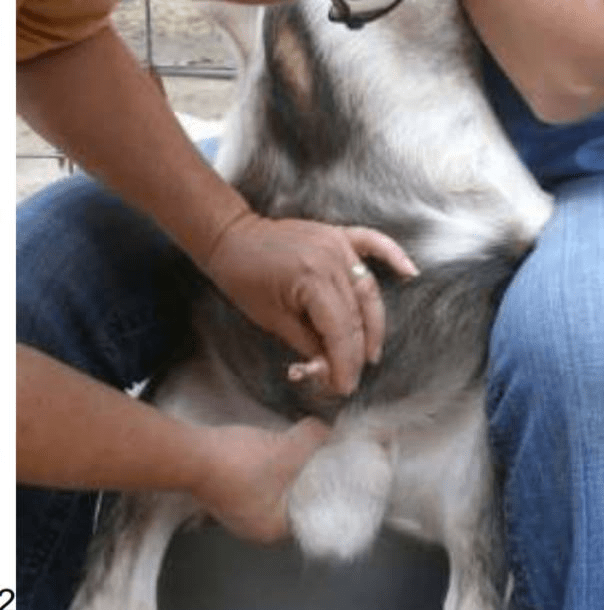
Step 1 In order to check your buckling or wether, enlist a helper to hold the goat in a sitting position You will need the helper to lean forward so that the goat is slouching.

Step 2 Place one hand behind the scrotum approximately where the sigmoid flexure is located. This is easily palpated, so practice trying to find the sigmoid flexure on a healthy male. You are going to press the “S” curve of the sigmoid flexure forward towards the end of the sheath. With your other hand gently push back on the sheath so that the end of the penis is exposed. You will need to be prepared to grab the penis and hang on. Until you’ve had some practice doing this it is best to have a wash cloth or some other cloth rag available to grip the penis with to keep it exposed.
Note …. Before snipping please double check and make sure it is only the pizzle before you snip. ( looks like a small thin worm on tip of penis)
Step 3 Pic on the left below shows the urethral process (pizzle) still adhered to the penis. Pic on the right below (red)shows the urethral process (pizzle) that has broken loose due to testosterone level increase in the maturing buckling. If producers will wait until the buck kids are closer to 4 to 6 months of age before wethering or castrating the goat more than likely will go ahead and break that urethral process loose.
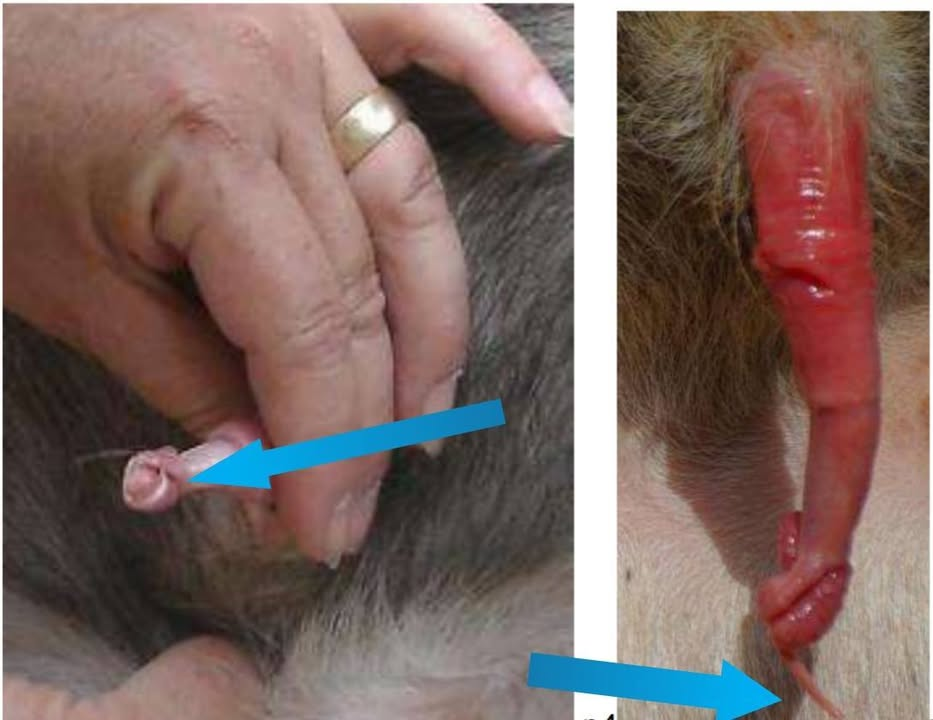
Step 4 The pic on the left below shows a pale and dying urethral process (pizzle). Another day longer and the urethral process (pizzle) would be dark purple or black as the tissue continues to die. To remove this blocked and dying urethral process get some sharp cuticle scissors and in one quick snip remove the urethral process (pizzle) where it joins the end of the goats penis. There will be very little bleeding if done correctly. Be prepared to possibly be sprayed with urine when the pizzle is removed. It won’t always happen but more likely than not you will see immediate relief and a urine flow. Make sure that the goat is up to-date on his tetanus vaccination. If he isn’t be sure to give him a tetanus antitoxin shot.

The pic below shows the removed urethral process (pizzle) as well as stones. This particular pizzle was packed solid with stones. You can see some of the stones looking like tiny grains of sand on the fingertips.

Conclusion
When a urinary obstruction occurs, it is an emergency in goats. If caught early when the blockage is only partial, then medical treatments and diet changes can be helpful, but future episodes or complete obstruction are a very real possibility. Full obstructions in which the goat is unable to urinate at all, are usually surgical emergencies and time is of the essence if the owner wants to save the life of the goat. And the best treatment, is prevention.
If the recommendations are followed in the above link by Dr. Ken Brown, then the risk of it occurring are greatly reduced.
**The Vet Corner groups encourage members to establish a relationship with their local veterinarian, don’t wait until an emergency.**
© 2014-2025 Rural Veterinary Outreach. All Rights Reserved.
 RVO Vet Corner Files
You must be logged in to post a comment.