By Deb Haines
The vast majority of lambs and kids that are born during favorable weather conditions will not require additional care or assistance at birth. However, there are several risk factors that you need to consider when animals are giving birth during cold weather: milk supply, kid/lamb size and vigor, maternal behavior and weather conditions. The most critical issues during a cold weather birth are starvation and hypothermia.
It is important the kids and lambs get dry as quickly as possible after birth. During freezing temperatures, this is even more important. If the mother is not doing a good job, the kid/lamb should be dried with a clean towel. Ears especially are subject to frostbite during freezing temperatures. If the kid or lamb is already severely chilled, it may be necessary to put the newborn in a hotbox or warm area to warm it up. If you place your finger in the newborn’s mouth and it feels cool, the animal must be warmed up before feeding. Never feed a newborn that is chilled.
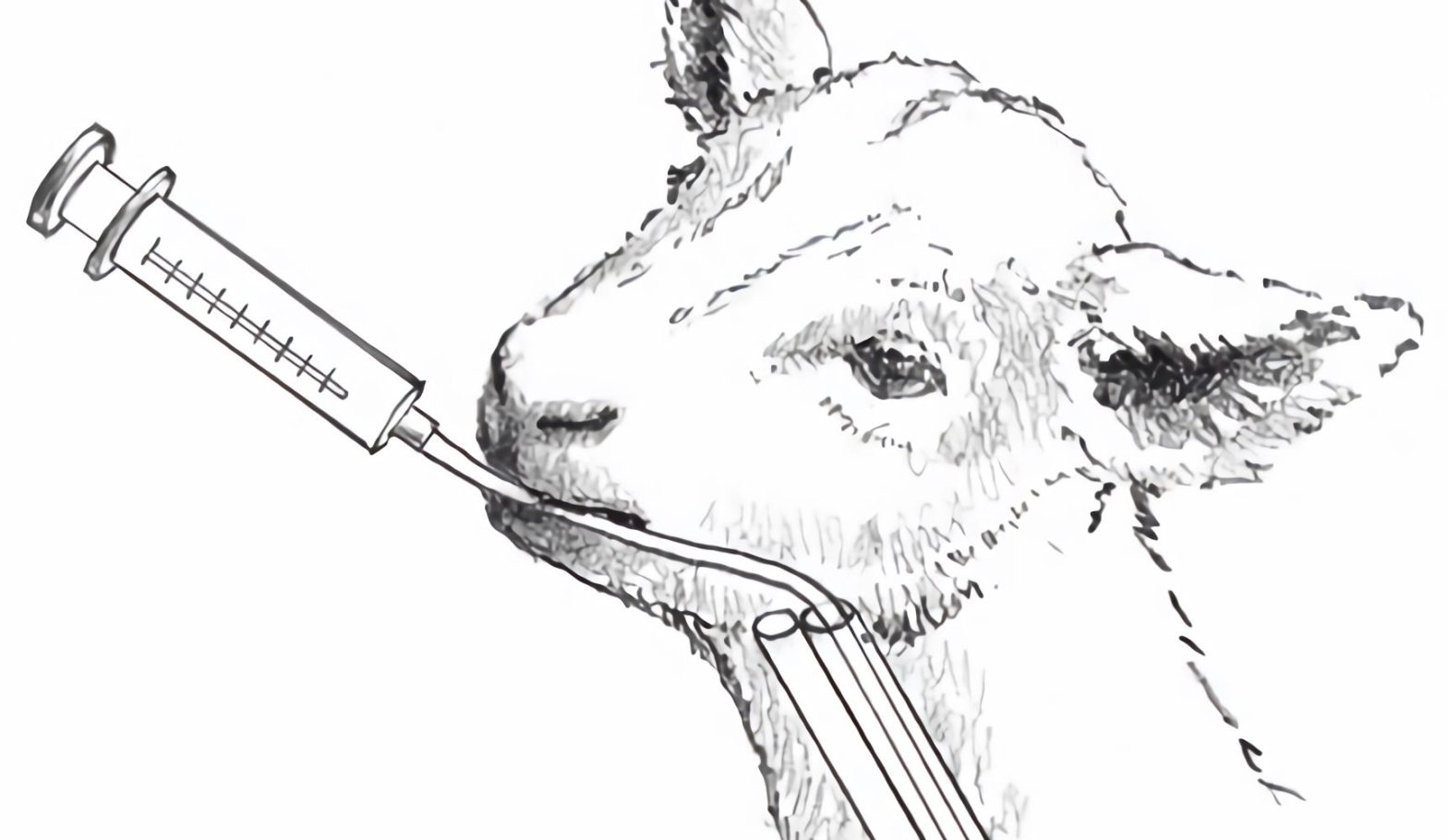
It is also important that these newborn animals get colostrum as quickly as possible. If the kids/lambs have not nursed, it is reasonable to feed these animals colostrum with a stomach tube. Stomach tubes can be purchased from nearly all goat/sheep supply companies.
If, despite your best efforts, a newborn kid will not nurse, bottle- or tube-feeding is necessary. Weak kids often do not have enough energy to nurse. To check a kid’s sucking ability, squirt some milk onto your finger and place it in the kid’s mouth. If the kid is too weak to suck, tube feeding is necessary.
When to tube feed
1) Determine that tube feeding is necessary. If a newborn lamb or kid has not nursed within two hours of birth, it should be tube fed.
PLEASE CHECK FIRST … If an animal is nursing or can take a bottle, there is no need t0 tube feed
2) If a lamb or goat kid is to weak to nurse
3) If mother has no milk and lamb or kid will not accept a bottle.
4) If mother has Mastitis or is ill
Do not tube milk or colostrum into a kid who cannot hold its head up or whose body temperature is less than 100*F.
Supplies needed…correct size feeding tube , a 140 or 60 cc catheter tip syringe , warm and measured amount of formula/milk and a towel.


Adult Goats/Sheep
To stomach the goat, have another person hold the animal steady. Before inserting the mouthpiece and tubing, place the tube alongside the goat’s body from opening of mouth to back of last rib to measure how much tubing should be inserted through the mouthpiece to reach the stomach. To insert the stomach tube, lift the goat’s head out and slightly upward without twisting or bending its neck.
Place the short piece of tubing into the goat’s mouth and over the tongue as far back as possible to prevent the goat from biting and swallowing the soft tubing.If you meet resistance, pull the tubing out and begin again. Before pouring liquid into the tube via the funnel, listen for a crackling/gurgling/popping sound which indicates you are in the stomach (rumen sounds) and not in the lungs. Gently blow into the tube to obtain more sound feedback to further insure that you do not have the tube in the lungs.
If the fluid does not flow smoothly through the tube and into the goat, pull the tube out a bit. you’ve probably got it in too far. When all of the liquid has been poured into the tube, wait several seconds before removing the tubing so that any fluid still in the tube does not enter the lungs as it is withdrawn. Rinse the tubing, syringe, and tubing thoroughly and hang to dry.

The two detailed links below will teach you the proper way to tube feed
NOTE….Dr. Ken Brown ….a simple rule of thumb – if they can holler as the tube goes past the throat area, you are not in the lungs — cannot holler if the vocal cords are forced open by a tube also, make sure placed deep enough (measure from tip of nose to a few inches past last rib) and mark where need to be on the tube itself if you meet resistance when placing tube, stop look where you are – if only 1/2 way in from marking, then are likely in lungs vs in the esophagus and stomach
Detailed video on how to tube feet lambs and goat kids
Detailed written information on how to tube feed
**The Vet Corner groups encourage members to establish a relationship with their local veterinarian, don’t wait until an emergency.**
© 2014-2025 Rural Veterinary Outreach. All Rights Reserved.
 RVO Vet Corner Files