
By Deb Haines
Baby goat’s poop changes a lot within the first week, so it’s always important to know what’s normal so you can spot a potential problem. For the first day or so, a goat kid’s poop will be tar like – black and super sticky. These are meconium poops and will usually pass in a day or two. The next poops are usually very yellow and very soft.
Watch out for very watery scours which usually occur when a kid is eating too much milk. This happens most often with bottle babies, but can happen with dam raised kids too. Also be observant for signs of constipation – you can usually observe this as a lack of appetite and discomfort without a fever present. After 3 weeks old, be on the look out for dark colored, foul smelling scours that could indicate coccidian.

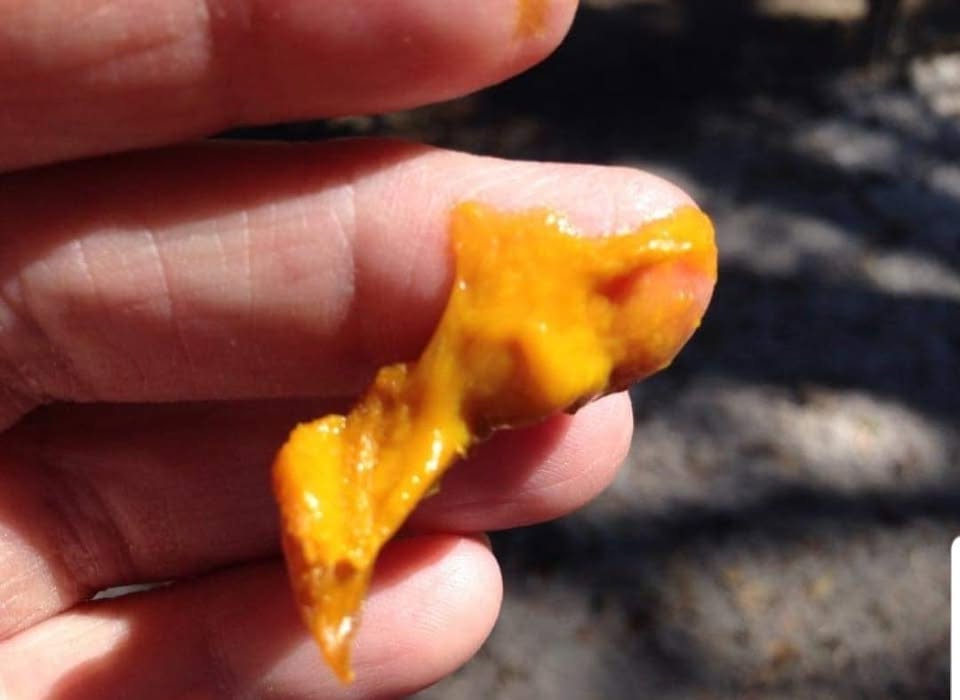
The next poops are usually very yellow and very soft. They will stick to everything and be a general mess. This is normal from for the first few days up until about a week. After that, you’ll start to see firmer logs with pellets forming.

This is normal goat baby poop for the first days to week or so. This will harden like tree sap does and will be very difficult to get off the butt and hair. This is from goat moms who do not clean the baby butt. If this happens the baby will not be able to pass more poop and will get very sick and perhaps die if not taken care of. Wash the area well with warm soapy water.
Blood In Poop
This can vary so kid must be monitored. The lack of colostrum can leave a baby wide open to e coli infection – which can have blood in diarrhea , nutritional related in some fashion from not enough to switching formulas, mixing formulas wrong.

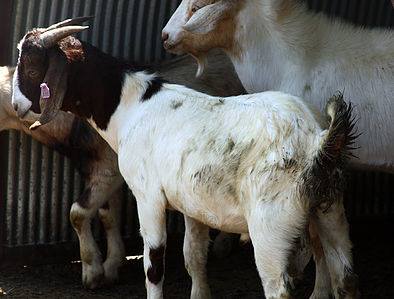
Coccidiosis ……Very watery, very smelly greenish or brownish scours signals massive digestive system damage.
Coccidiosis is caused by microscopic protozoan parasites called coccidian (Eimeria spp.). Coccidia go through a complex “life cycle” in the intestinal cells of goats. In the process, they produce large numbers of eggs (technically called oocysts) that are passed in the feces. In the process of growth and multiplication in the goat intestinal epithelial cells, the coccidia may destroy many intestinal cells. This may cause diarrhea and other signs of the disease coccidiosis.
Coccidiosis is the most common cause of diarrhea in goats between 3 weeks and 5 months of age. This is especially true when goats are housed in confinement. Coccidiosis commonly strikes young goats shortly after weaning because of the stress of being suddenly separated from their dam.
Nearly all (or most) adult goats carry coccidia in their intestines. The very small eggs or oocysts passed in the feces of adult goats hatch in the environment and goats pick up the infective stages of the coccidian either directly from the manure or in contaminated feed and water. When present in small numbers, coccidia normally are not a problem. Therefore, the number of coccidia that invade the intestines will determine the severity of the infection. There are many different species of coccidia, some being non-pathogenic, and others being either mildly, moderately, or severely pathogenic. Feces may, for example, contain a high number of nonpathogenic coccidia eggs, or a low number of more pathogenic coccidia eggs. In general, if the animals do not show any clinical signs (diarrhea, etc.), the infection is probably not significant.
In the presence of appropriate temperature, moisture and oxygen, coccidia eggs (oocysts) passed in the feces “hatch” (technically referred to as sporulation) and become infective in two to several days and can readily contaminate feed and water. Upon ingestion by other goats, these infective forms (sporocysts) pass through the stomach and into the intestines. Then the sporocysts invade the intestinal cells and undergo several changes. Sick, young and stressed goats (weaning is extremely stressful on kids) are more susceptible and in these cases the coccidia may proliferate. It is this damage, the destruction of cells lining the intestines and damage to tissues, which give rise to the signs of coccidiosis.
When a coccidiosis outbreak begins, only good sanitation and isolation of sick animals will prevent its spread through the herd. Coccidia eggs are resistant to many disinfectants and may survive more than a year in the environment. They can stay alive in a pasture as long as they are in a moist and dark environment, but will die when temperatures drop below freezing. Goats that survive coccidiosis develop a degree of immunity to future coccidian problems.
Diarrhea In Neonatal Ruminants
**The Vet Corner groups encourage members to establish a relationship with their local veterinarian, don’t wait until an emergency.**
© 2014-2025 Rural Veterinary Outreach. All Rights Reserved.
 RVO Vet Corner Files
You must be logged in to post a comment.