By Dr. Timothy Snider
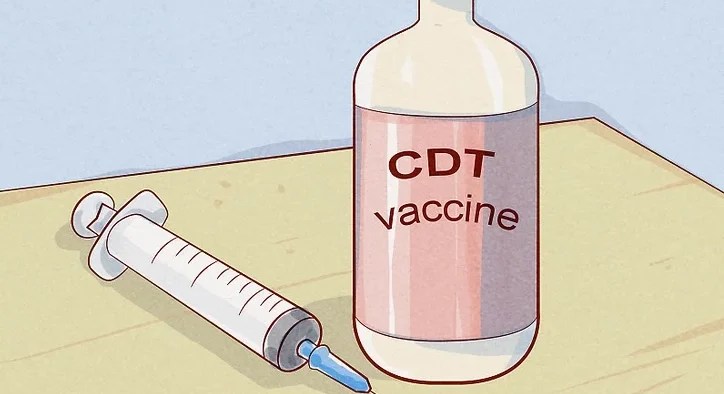
Please please please vaccinate your goats for Clostridial enterotoxemia and tetanus. You may know the vaccine as CD-T. The first two letters indicate the subtypes of Clostridium perfringens (C&D) the bacterin is protective against; the T is a designation for Tetanus protection. In the whole spectrum of animal health supplies, CD-T vaccine is DIRT CHEAP. Follow the label: For a primary series, give label dose, then booster about 3-4 weeks later. DON’T forget the adult annual booster.
Why do I write this?
First of all, as I’ve seen frequent postings over the past two months of suddenly down goats, some with neuro signs, most with diarrhea, Clostridial enterotoxemia has to be the first diagnosis to consider. I would like to clarify that further by indicating that I’m an ACVP certified veterinary pathologist, and Clostridial enterotoxemia can be one of the most difficult diseases to DEFINITIVELY diagnose. DEFINITIVE diagnosis requires prompt sample submission, culture of the agent, demonstration of toxins, and rule out of other causes. So, as we often LACK definitive diagnoses, my willingness to dogmatically diagnose the disease has only gone up.
Next, my own personal herd has been hit by this disease in the past two weeks – with loss of one baby and loss of one doe. The baby died between dose 1 and dose 2; the doe was 2 years old, and wedidn’t have records of an annual adult booster. We’ve not had these troubles before, and with the increase in reports seen on GVC, I seem to think weather-induced changes as well as altered management practices might explain what we’ve seen. Allow me to explain a little: The Clostridium that causes this disease is out there and is as common as the oxygen in the air we breathe. Some subtypes of Clostridium are even part of the NORMAL microflora. If it isn’t part of the normal flora, it’s for sure out in the soil. EVERYWHERE. So how does it cause disease? It causes disease – in an animal insufficiently immune – by OVERGROWTH and ELABORATION of toxins. But how does that happen?
That can happen any time there is a change in ration, management, etc. One synonym of the disease is OVEREATING disease because it is seen in feedlot lambs put suddenly on a richer diet. But can that happen in hobbyist goat small-holdings? Sure it can. It might be subtle. It might be multi-factorial. It might even be part of the goat enthusiast trying to do the right thing. Here’s a typical winter scenario: Animals are cold; there’s a recent snow or rain; ground is wet; cold blast is coming in tonight…so we plus up their grain ration just a little and throw in a little more or a little richer hay.
Though that sounds like a tiny adjustment, such an adjustment could be magnified if you have a band of does that eat together and one might dominate a single feeder. All of a sudden, a modest 5% bump in feed becomes a 10-12% bump in feed for her. We think that’s what happened to our doe. Other documented risk factors are co-occuring parasites and altered gut motility. The former could be a slight shift in barber pole or Coccidia burder; the latter could be something as simple as frozen water buckets and the goats are drinking water in different quantities at different times.
Next, let me emphasize what Clostridial enterotoxemia does. The overgrowth of Clostridiuim in the gut produces a ton of toxins that get into the bloodstream. One target organ is the BRAIN. This disease often hits fast and suddenly, and a doe that ate well at 6PM Saturday night can be dead at 7AM Sunday morning – with or without some of the characteristic diarrhea. In emphasizing what it does, I want to emphasize the neuro signs. I see a great many posts on here where the owner initiates some sort of ‘meningeal worm protocol’ or ‘Listeria protocol’.
Let me speak to those two entities. First, I apparently do not reside in areas where those pathogens are more common, so I cannot categorically exclude those from a list of possibilities. But, I can say two things on those entities: First, they are quite uncommon and VERY VERY difficult to definitively diagnose, and Second and most importantly, I wish to emphasize a personal philosophy common to veterinarians, and that philosophy is this: “Common things happen commonly.” Alternatively put: “When you hear thundering hoofbeats, you want to think horses first, and zebras second.” Thus, Clostridial enterotoxemia is certainly capable of causing that neuro sign you are seeing – the seizure, the flat out appearance, the arched back, the cries of pain, and head thrown back, etc. And not only is it capable of causing the neuro sign, it is by far more common than the meningeal worm and the Listeria. Clostridial enterotoxemia is the horse; meningeal worm and Listeria are the zebras.
Finally, let me emphasize the HIDDEN BENEFIT of vaccinating for CD-T. But first I re-emphasize the NON HIDDEN BENEFIT – properly administered and boostered, it will aid in the protection of your goats from those diseases. So, here’s the HIDDEN benefit: When you have an appropriate vaccine program – good products, given per label, good records, no cutting corners – you can then more confidently ELIMINATE Clostridial diseases from your personal diagnostic considerations when faced with a mystery illness. If you didn’t catch it earlier, ALL of these neuro entities of goats are difficult to diagnose (and I’m truly a credentialed expert in such diagnostics, so please believe me). Thus, when you can demonstrate a vaccine program in place against Clostridial disease when faced with a suddenly ill, neurologic goat, you can help yourself better – and we can help you more efficiently – by advising and helping to treat these other potential neuro insults and diseases.
A couple of quick post-scripts:
1. I know there are a few GVC patrons on here who likely disagree with vaccines. If that is you, I am not inviting debate. You will not convince me, and let’s not go there.
2. Just like our annual flu vaccine, there are few vaccines that even get close to 100% preventative protection. Keep that in mind with CD-T.
3. There is a CD-T antiserum/antitoxin biological product available for sale through some companies. It is NOT a vaccine. It MIGHT be effective in some enterotoxemia cases that are caught earlier, and it MIGHT be something some of you wish to keep on your shelf.
I hope this is helpful to some of you.
Questions and Answers
- Thank you for the info. Can you recommend a specific vaccine that does not leave a large bump cause hair loss? I’ve used Bar-vac and regardless of where I put it, it results in a large bump that seems to stay forever I have one doe and the lump has stayed the same for a year now.
Unfortunately, that is the DOWN side to the Clostridial bacterins/toxoids in animals. They are typically a highly reactive vaccine. We vets like to think that aspects of technique influence that some, and that’s probably true but unproven. Proper sub cutaneous positioning of a sharp, new single use needle, delivered through properly cleansed surface skin, all in a properly restrained goat are recommendations. To be clear, those are recommendations I don’t always follow, and I’m the vet. When the goat is struggling under restraint, our needle positioning can go awry – we might deliver some of the product into the muscle or even into the skin surface where it has a higher chance of major inflammation. Similarly, dirty skin is important. Your introduction of that needle will inevitably drag what ever else is on the surface when you vaccinate. I cannot guarantee that if you follow this exact recipe that you will get a knot free CD-T vaccine site, but I can say with confidence that 100 goats vaccinated with clean and good technique will have fewer knots than goats vaccinated in a rush with steps skipped and corners cut.
2)I often see it advised for a doe to be vaccinated 30 days prior to kidding. With some of my does, I don’t have a due date, but they have been vaccinated yearly for at least three years. Will the kids still have some immunity if a doe was vaccinated, for example, seven months before kidding? And when should kids get their first vaccine? I see some people give at a few days, and some wait until a couple months.
Yes, a booster late gestation is ideal. With that said, your vaccination program appears to actually be fairly good, and some protection will be getting to the babies via colostrum. A better timed booster during late gestation would take a good situation and make it better.
3)Is Bar-Vac the only option or are there others? Any benefit to one type or another?
I don’t have a Compendium in front of me. There are probably 4-6 brands out there. All have went through some government level safety and efficacy assessment. Price points may differ on aspects of preparative technology. More expensive is typically higher quality but all will meet minimum standards.
4) I will admit I didn’t give mine their CD-T the last two years. What do I do now? Give all four an injection and then 4 weeks later give them same dose again? followed by once a year injection after that?
Yes to all you said in your comment. That gets you back in a cycle and on the plan.
5)Is the same clostridial strain the issue globally or are variations in the vaccine required country to country?
The perfringens type D is worldwide. One of the perfringens subtypes (B or E, can’t remember) is very uncommon in the US.
6)Are you able to buy CD-t over the counter in Australia or does a vet have to administer please
Dr. Sandra Baxendell = Yes you can buy these sorts of vaccines over the counter but the vaccines I recommend Glanvac 3 is only sold in 250 mls packs as the smallest – enough to do 250 sheep or goats so often cheaper to buy in syringes or repackaged sterile bottles from your vet. The opened pack must be used in 1 month.Glanvac 3 has tetanus Type D and CL protection. I have never seen type C in Australia
7) 2 years ago I lost 2 kids to what my vet thought was clostridial. It was awful to watch my babies get so sick and die within hours … my vet told me to vaccinate everyone yearly and vaccinate does again right before being bred. I’m still a bit confused on when to vaccinate. I’ve done it yearly in may for everyone and gave both does a booster in Dec. Right before they we’re bred. They are due mid April, should I revaccinate does again a few weeks before kidding? And when should I vaccinate the kids?
Easier to answer on the kids. With does being vaccinated, I’d suggest kid vaccines starting around 10-14 days, boostering 3-4 weeks later. Regarding the mature does and a revac with new timing, there’s no easy, defensible answer. You’d be safe 99% of the time with either strategy. The 1% risk of not re-booster now is there might be lower overall protection in colostral antibodies for babies. The 1% risk of doing a re-booster now is reactions – these are products that are chock full of ‘antigens’ that stimulate immune systems, and we will see anaphylaxis from time to time. So there’s a balance there, and I’m not sure what to tell you.
8) Can a goat who has what I would call failure to thrive, get this even though he was vaccinated every spring(by a vet)?
From my perspective and definition of ‘failure to thrive’, that is more often due to either: 1. Failure of passive transfer (not a good colostrum quantity or quality), 2. Delayed time in birth canal (hypoxia and brain damage), or 3. A combination of 1 and 2. The vaccine history would mitigate AGAINST enterotoxemia.
9) I have an 8 day old lamancha doeling that was born from an unvaccinated doe. she was stepped on at birth and exhibited the star gazing, head to back pulling, and circling, we gave her 2 B complex shots for 5 days, and once a day the last 3 days,,, with penicillin the last 5 days,,, she is showing some improvement, but still cant see and wont open her mouth without forcing it open,,, when do I give her a CDT?? and all the vaccines at me co-op are labeled for cattle use,, are they ok to use???
Impossible to say what’s going on with the multiple factors at play. 8 days of age is a little early/atypical for enterotoxemia, but like you identified, she’s out of an unvaccinated doe, so it broadens the opportunity. Regarding vaccinating now, as heartbreaking as it might seem, I wouldn’t recommend it. Animals need a functioning intact immune system to mount an appropriate response to the vaccine, and I doubt that would happen right now. CD antitoxin would be a consideration. Regarding cattle vaccine, you might ask if they have the small ruminant CD-T. (It might be at the back of the fridge or mis-labeled. If it’s cattle only CD-T, we would be uncertain on dosage. There are a handle of CD-T products that are cattle, sheep, and goats, and in those, the cow dose is 5cc, and the small ruminant dose is 2cc. You might double check
10) Someone mentioned to me vaccinating with CD-T every 6 months; although, you stated yearly vaccination. Have you heard of a 6 month recommendation versus a yearly?
Label is the official recommendation because anything called into question regarding product fidelity, veterinary advice, legal actions, etc will always go back to the product label, which is a legal document. That said…..there are certain diseases where the disease ecology is different and products get used differently. For example, cattle that are aborting calves due to Lepto will often get Lepto vaccine 2X/yr instead of once, which the label indicates once a year. The label does not restrict you from using it differently; but the label protects the company from legal action if you have an adverse outcome when using it off-label. I hope that makes sense. At the CORE of your question is the idea of “DURATION of IMMUNITY.” And believe me, it is a hot topic in all of veterinary medicine. We have studies on some vaccine products that clearly know duration of immunity, but for the majority of products, those longevity studies were never done, because they are so darn expensive. Duration of immunity studies in one vaccine product for an ag minor species like sheep or goats would change the CD-T vaccine from 80 cents a dose to 50 dollars a dose. Even if that study were to definitively prove CD-T vaccine lasts 8 yrs, you could vaccinate a doe every other month with the cheaper product before you’d ever spend the $50 on the improved label product. Bottom line: You might have local conditions that dictate different product usage, but I don’t know your local conditions.
11) What should you do if you do the first vaccination for a kid and then forget to do the second at 3-4 weeks later? Should you start all over or just give the 2nd when you remember? I am TERRIBLE about forgetting the 2nd shot until its like 8 weeks later.
Interesting question. It’s a question I’ve asked before, too. In fact, some colleagues and I wrote a grant proposal to ask and answer than unanswered question, but it was not funded. (Life in academia.) Officially, per product label, the scenario you paint means the animal is then considered unvaccinated and you start over. Unofficially, there is plenty of anecdotal evidence that the booster injection given later than what the label says is still protective. Our grant proposal was written to try to prove the anecdotal assertions and to get a handle on the timing issues. Also, it stands to reason that the closer your booster dose is to the original dose, the more likely you will still get boostered (anamnestic) response. Thus, if booster is required 3-4 weeks later, and you do 8 weeks later, then that is certainly better than 8 months later. What we don’t know is where that line begins to break. If you have friends in vaccine companies, give them my contact info and tell them to fund our study.
12) I have also wondered about using open vaccine. They all say to use immediately but that really isn’t very probable when you have a small herd. Does it loose it’s effectiveness after it has been opened?
I’d say there are gradations of this guidance. There are viral vaccines that are listed as ‘modified live viral vaccines.’ Those typically require water based reconstitution. Once reconstituted, use immediately or trash. Killed viral vaccines are the next step down. Finally, CD-T vaccine, blackleg vaccine, etc, are products that if appropriately stored and cleaned, can typically be used multiple times. Clean new needles need to be introduced each time, as well as the pervasive “Shake well before using.”
**The Vet Corner groups encourage members to establish a relationship with their local veterinarian, don’t wait until an emergency.**
© 2014-2025 Rural Veterinary Outreach. All Rights Reserved.
 RVO Vet Corner Files