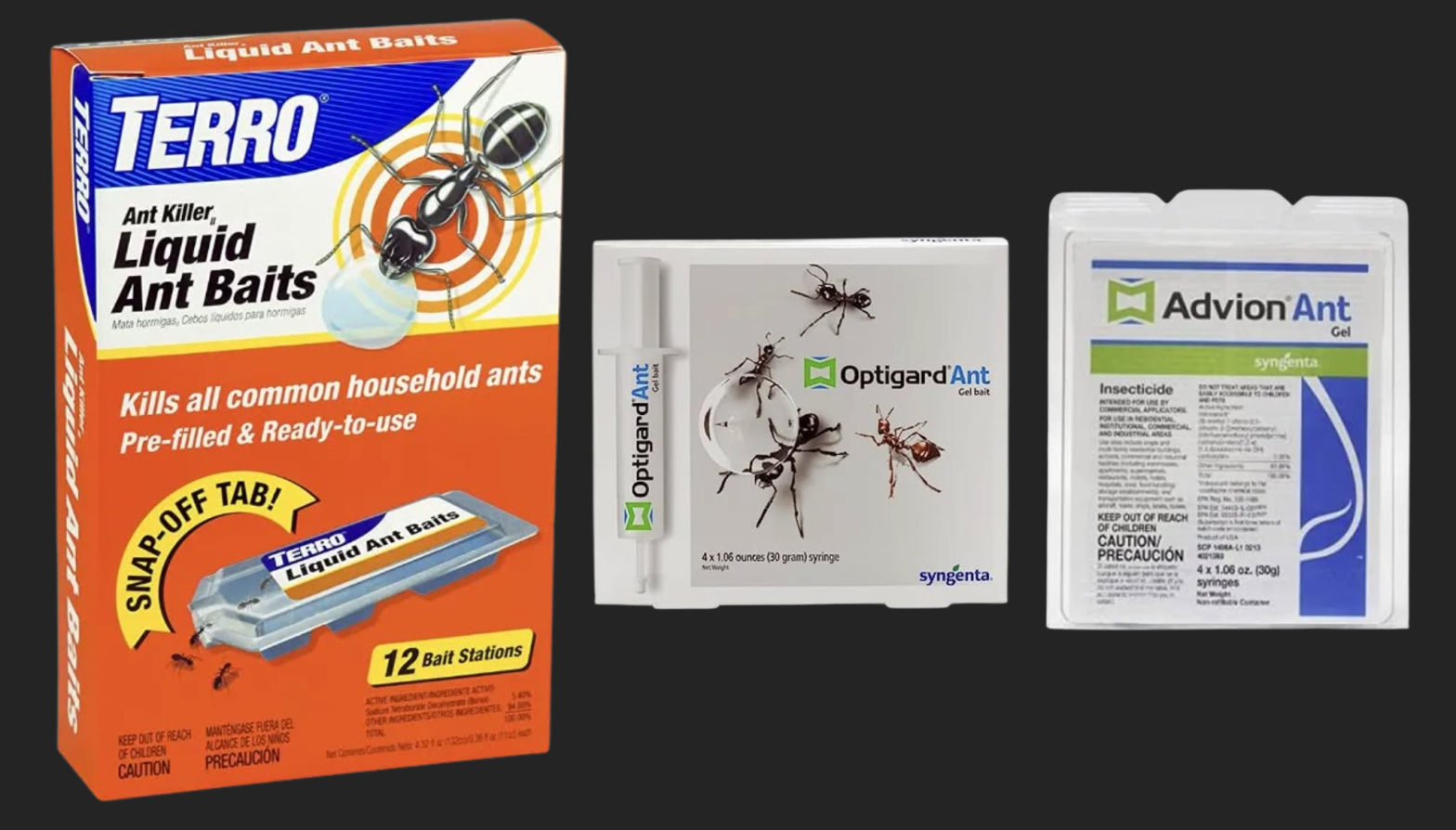
There are many different types of ant control methods available, but when you’re looking for pet safe indoor ant killers, then you’ll almost always only want to use liquid or gel bait ant control methods.
Why Is Ant Gel and Liquid Baits Safer Than Sprays?
Ant baits are safer for your pets because they have an extremely low amount of poison concentration compared to sprays. Along with this, baits come in little bait stations which are often placed on top of countertops, or in crevices which makes it difficult for your pets or family to reach, but easy for ants to reach. Although ant sprays are effective, you end up treating a huge area with spray which means the likelihood for unnecessary contact is extremely high.
NOTE … If you have pets or small children, do not use ant sprays!
Types Of Ant Bait Stations
Note.. Not all ant bait stations are created equal, meaning each one may have a different warning label for pets.
To help you better understand the product.
*Raid ant traps: This bait contains 0.05% of avermectin as the main method of ant control
*Terro ant traps: This bait contains 5% Borax as the main method of ant control
*Enforcer ant traps: This bait uses abamectin as the main method of ant control
*Combat ant traps: This bait contains 0.001% fipronil as the main method of ant control
NOTE.. The main ingredients in these ant traps can be extremely toxic in large amounts, so it is still always important to keep them away from your pet at all times to be safe.
Though the amount of chemicals in one ant trap may not be life threatening, there is a possibility of gastrointestinal upset and irritation.
Ant Traps Safe For Cats ( *ALERT* )
AVOID Pyrethrin
A common chemical found in many ant traps and pesticides in general is Pyrethrin. It’s commonly used because it works and considered safe. If used correctly, Pyrethrin products are relatively safe for dogs, but cats are very sensitive to Pyrethrin, and even small doses can be dangerous to cats.
To prevent your cat from being exposed to liquid ant baits, place the baits in areas that are inaccessible to your pets, such as behind appliances or under cabinets. You can also use ant traps that are enclosed to prevent your cat from reaching the bait.
Pretty Safe Ant baits (nothing is 100%, each pet is different )
*Terro T300B Liquid Ant Killer
Extremely Effective ,and Borax makes it safer for pets
*Syngenta Advion Ant Gel
More Powerful, Uses Indoxacarb .05% Which Has Low Toxicity At These Doses.
*Optigard Ant bait gel
This Is What Pest Professionals Use, When Used As Directed It’s 100% Safe For Pets.
Why Are Pets Attracted To Ant Traps?
Pets are attracted to ant traps for the same reasons ants are; they smell sweet!
What Should You Do If Your Dog Chewed On An Ant Trap
While most ant traps do not contain enough harmful chemicals to do serious damage, it does not mean they are completely risk free.
To ensure your pets safety, if your pet chews on an ant trap.
Contacting The Pet Poison Helpline would be wise!
Anytime your pet consumes a product that is not veterinary related, it is best to contact the Pet Poison hotline. This poison helpline has a database of every product on the market.
- Pet Poison Hotline -(855) 764-7661
- Animal Poison Control -(888) 426-4435
If your pet ingests an ant trap, it is best to contact your veterinarian to be on the safe side. Even if the amount of chemicals in the product is not toxic, there are some other factors to be on the alert for. When your pet eats an ant trap, they generally consume the plastic that surrounds the bait, especially a dog. Even if the small amount of chemicals may not be life threatening, the plastic can be. to your pet.
What Symptoms Should You Watch For
So, what symptoms should you look out for if your pet licks or eats an ant trap?
Vet Corner groups always suggest contacting your veterinarian the moment your pet touches the bait/trap, for each pet is different.
Why? With any product there can always be the possibility of complications. We encourage you to contact your vet immediately if you see, Vomiting, Drooling ,Diarrhea, Anorexia, Abdominal pain, Lethargy or any abnormal behavior.
**The Vet Corner groups encourage members to establish a relationship with their local veterinarian, don’t wait until an emergency.**
© 2014-2025 Rural Veterinary Outreach. All Rights Reserved.
 RVO Vet Corner Files