by Deb Haines
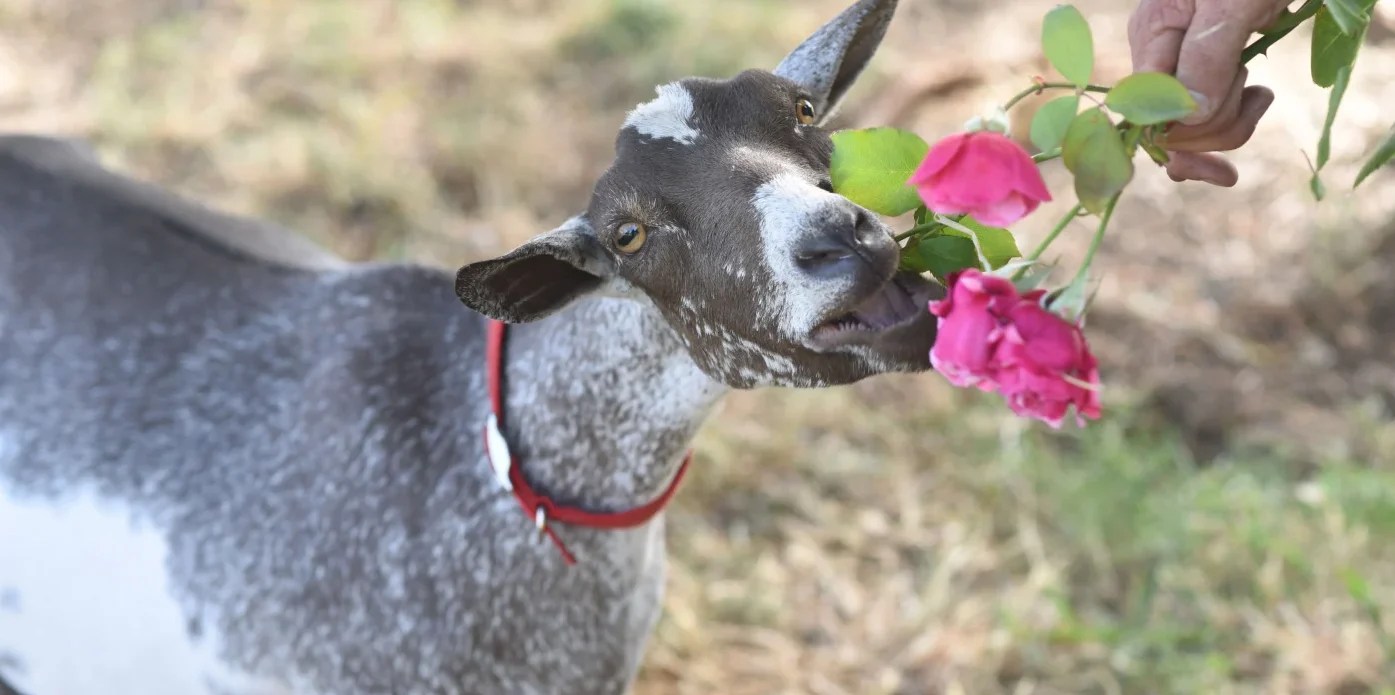
AZALEA — ( Rhododendron Indica): Azalea Toxicity in Goats. Serious poisoning, even death can result. Azaleas can be toxic to goats, and even a small amount of the plant’s foliage can result in poisoning. The poisoning may be from an animal “browsing” among the azalea or occasionally, poisoning occurs due to well- meaning individuals throwing azalea clippings to nearby goats. Azaleas are found worldwide and have been responsible for numerous instances of poisoning in livestock, humans and pets. These evergreen, semi-evergreen, or deciduous shrubs with flowers of various colors are frequently found as ornamentals in the southeastern United States. For goats, fresh foliage at 0.1 percent of the goat’s body weight may be toxic (That means 0.1 pound or 1.6 ounces of fresh azalea foliage could be toxic to a 100 pound goat). Nectar and honey made from the flowers of these plants may also be toxic.Ingestion of toxic amounts of the azalea plant often results in development of the following clinical signs within six hours of exposure:
•Depression and head pressing
•Severe salivation
•Abdominal cramps and bloat
•Vomiting/regurgitation
•Muscle tremors
In severe cases, animals may develop an abnormal cardiac rhythm, hypotension (low blood pressure) convulsions and high fever (up to 106 degrees° F). Occasionally, affected animals vomit and then inhale part of what they are thowing up, causing a severe pneumonia which may result in death.
Diagnosis usually is made on the basis of a history of exposure and display of typical clinical signs. Finding plant parts in what an animal has regurgitated can also be used to confirm the diagnosis. Recently, however, tests have been developed to detect the toxin, Grayanotoxin, in the feces and/or urine of animals suspected of having consumed azaleas. This test can be used as a diagnostic tool when history is unavailable or clinical signs are deceptive.
There is no specific treatment for azalea toxicity. Supportive care, including administration of intravenous fluids, may be recommended by your veterinarian. Although animals can recover if treated promptly, azalea poisoning often is fatal for goats.
Owners should make every effort to prevent exposure of goats to azaleas through such means as securely fencing them away from the plants. Goats seem to be attracted to the taste of azaleas and will readily consume them.
Please always remember if possible build a relationship with your local vet so you can call if you have this type of emergency. If you have this type of plant please keep this information handy at all times.

Bracken Fern (Pteridium)
Bracken fern is very common in wooded areas and unimproved pastures. Most animals will not eat bracken fern if there is adequate pasture or other feed. In ruminants, such as goats, bracken fern must be consumed over a period of several weeks before toxicity signs develop. Affected animals are listless, show weight loss and may exhibit small hemorrhages on the mucous membranes. They may die from internal hemorrhages.
Bracken fern is potentially poisonous to livestock and contains two different poisons. The type and
severity of any poisoning event will vary greatly from place to place because the amount of each
poison produced by a particular population of bracken plants is highly variable.
The first bracken poison interferes with thiamine (vitamin B1 availability in the animal and as a result causes brain damage. This form of poisoning is usually seen in horses, pigs and occasionally sheep and goats. It only occurs after an animal has eaten a lot of bracken over several weeks. Affected animals become unaware of their surroundings, can be seen wandering aimlessly, have an uncoordinated or staggering gait, and will eventually lie down and experience convulsions.
The second bracken poison causes cancer of the bone marrow and bladder. Although all livestock species are potentially susceptible to this poison the majority of cases involve cattle. Several months of eating bracken is required before signs of poisoning appear.
Affected cattle can present in three different ways. The first is an acute effect that involves bleeding
from the nose and anus, and the development of small areas of hemorrhage under the skin of the
mouth, rectum and vagina. The second is more chronic and involves a combination of passing red-colored urine, becoming anemic, losing weight and developing cystitis or an inflamed bladder.
The third may occur alone or in combination with the second. It involves the development of tumors
in the bladder, but these may only be found after death during the post mortem. Rhizomes and new fronds are more toxic than mature fronds so take great care when grazing stock in paddocks that have been recently treated. Slashed, mature fronds might be eaten by stock like hay, so avoid grazing hungry, young or new stock in these areas. If grazing cattle, provide them with a good alternative feed source such as hay or grain. Goats and sheep are less susceptible to bracken poisoning so you can graze them with caution in these areas but not recommended.
Prevention:
Poisoning, apart from thiamine deficiency, is essentially untreatable; however, it is most easily controlled by preventing exposure. Bracken fern is usually grazed for want of alternative forages. Most commonly, animals are forced to eat bracken fern when other forage is exhausted in late summer, although some animals may develop a taste for the young tender shoots and leaves. Poisoning can be avoided by improving pasture management to increase production of alternative forage. It has been suggested that alternating bracken fern–contaminated and noncontaminated pastures at 3-wk intervals can minimize poisoning.
Bracken fern growth can be retarded by close grazing or trampling in alternative grazing pasture systems. Bracken fern density can be reduced by regular cutting of the mature plant or, if the land is suitable, by deep plowing. Herbicide treatment using asulam or glyphosate can be an effective method of control, especially if combined with cutting before treatment. Some bracken fern populations contain very low or no ptaquiloside. More work is needed to identify these populations, determine why they are not toxic, and use this information to predict or reduce toxicity.
Note…. In cattle, bracken poisoning can occur in both an acute and chronic form, acute poisoning being the most common.

Chokecherry (Prunus virginiana)
This is a very common tree found or planted around pastures and yards. An efficient killer: Sudden death is often the first sign of chokecherry exposure in ruminants, horses and swine.
Chokecherry trees, along with other Prunus species (wild cherry, apricots, peaches and cherry laurel, pin cherry, Black cherry), are often found adjacent to pastures as windbreaks or ornamental trees or shrubs. Members of this group pose a deadly hazard to all ruminants, horses and swine. The toxins, cyanide glycosides, are found in the leaves and seeds of the plants but not in the fresh fruit. Ruminants are more sensitive because of the rapid break down and absorption of cyanide by the rumen.
The most common clinical sign is sudden death within minutes to a few hours after ingestion. Most often animals are just found dead in the field, but tremors and twitching progressing to prolonged seizures and death have been observed. The antidote, an intravenous combination of sodium nitrite and sodium thiosulfate, is rarely used because of the rapid onset of intoxication.
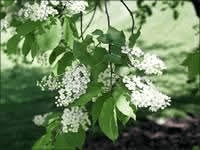
The thin leaves are dark green and shiny above, pale and dull beneath. The leaf is finely toothed with outward curved teeth. It is oval and quite broad, and narrow toward the base.
The stout twigs are aromatic and bitter, light brown to dark red-brown and marked with large, oblong white spots. On older stems it becomes dark gray, slightly roughened or scaly and matted.
The small, fleshy and cherry like fruit is found on short stems in clusters similar to grapes. It is nearly black and is edible when ripe. On young stems, the bark is smooth and gray.Chokecherry is found in most states.
Damaged leaves pose the greatest risk. All parts are potentially toxic.
Choke cherry contains cyanogenic precursors that release cyanide whenever the leaves are damaged (frost, trampling, drought, wilting, blown down from the tree during storms). Most animals can consume small amounts of healthy leaves, bark and fruit safely; however when hungry animals consume large amounts of fresh leaves or small amounts of damaged leaves (as little as 2 ounces), clinical cases of poisoning will occur, and many animals may die. This is especially true if there is no other forage for the animals to consume, or in the case of pets, when confined and/or bored, the chances for toxic levels of ingestion can occur.
These trees should NOT be planted in or near pastures, and any existing trees or shrubs should be removed. Trimmings should not be fed or disposed of in a pasture where animals have access to them.
Please remember if possible build a relationship with your local vet in case of a Emergency ! Check your pastures and yards regular for toxic plants and trees your knowledge of these can save the lives of your animals.

Foxtail (Hordeum murinum)
Foxtail is a nuisance weed that is dangerous to Sheep, Goats, Cattle, Horses , Llama’s and Alpaca. Mechanically Injurious Parts of the Plant: Awns of plant. Common Location: Throughout the U.S. with many in the western U.S.
Toxic Signs or Symptoms: Injurious to eyes, soft tissues in the mouth, digestive tract, skin, wool or hair.
The microscopic barbs on the seed heads of stems of foxtail can cause physical trauma to the mouth leading to mouth blisters, irritation to the gastrointestinal tract, and occasionally the skin of the animal.
Livestock can safely graze foxtail barley prior to seed development. Forage value of this grass is fair to good at this time. Seed production for this grass occurs from late May to August. Foxtail barley at lower elevations (warmer regions) will produce seeds earlier than higher elevations (cooler regions). Grazing this plant after it produces seeds can cause a number of problems for animals.
Once seeds form, awns extending from the seed can abrade or become lodged in the skin, mouth, nose and eyes of grazing livestock. Lodging is due to foxtail having small sharp barbs located along the outer edges of the awns , Due to the awns, livestock encountering this plant in a pasture or rangeland situation will avoid grazing it and will seek alternative forage.
For these reasons this grass is likely to increase under heavy or continuous grazing while at the same time grasses that are more palatable are likely to decrease.
The barbs on foxtail awns also allow it to easily become lodged in the hair and fur of livestock and wildlife. Once caught on the animal, the seeds can be transported to new areas for colonization or further distributed within areas that they already occupy.
Sheep are at high risk for catching these seeds, and the value of their fleece declines when they are contaminated. The value of hay is also affected by the presence of foxtail barley.
Unlike in rangeland situations, animals fed hay contaminated by foxtail are unable to avoid eating the plant. Contaminated hay is unsafe for livestock. Livestock that have eaten contaminated hay may show symptoms such as drooling and lack of appetite. Awns may also become visibly lodged in the snout of animals eating the hay. The drooling and lack of appetite is caused by the mouth of the animal being impacted and inflamed by hundreds of awns. Owners are encouraged to inspect their hay, and if any foxtail is found, discard that hay immediately.


References… Merck Veterinary Manual
NSW Department of Primary Industries
**The Vet Corner groups encourage members to establish a relationship with their local veterinarian, don’t wait until an emergency.**
© 2014-2025 Rural Veterinary Outreach. All Rights Reserved.
 RVO Vet Corner Files
You must be logged in to post a comment.