From: Various HVC Vets
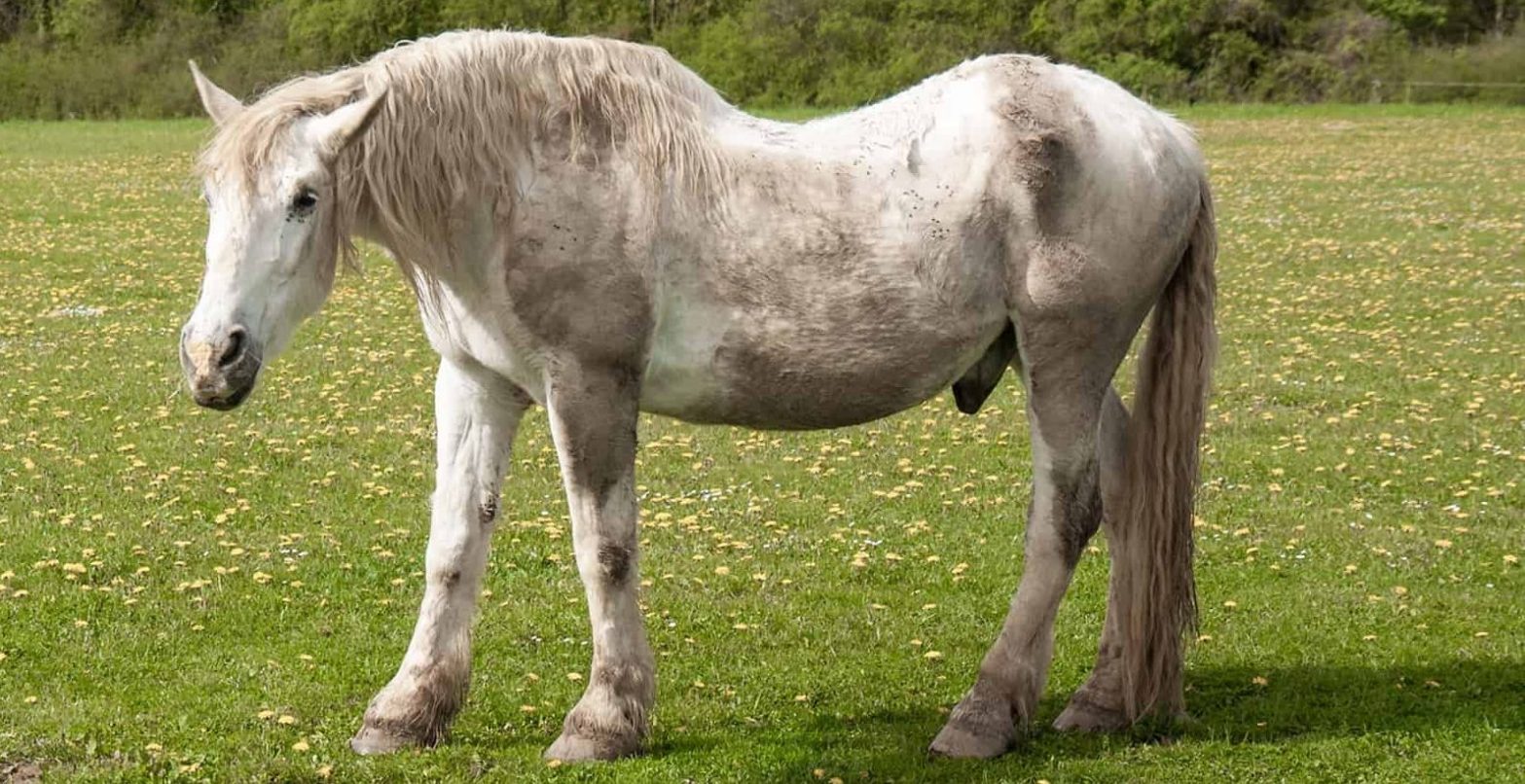
You’ve come out to the barn and found that your gelding’s sheath is swollen. There are many reasons for this.
The first thing to do is to examine the sheath and ventral (bottom) abdomen. Do this safely by standing with your hip at the horse’s shoulder and face backwards. Have a confident handler that stands on the same side of the horse as you. Feel the underside of the abdomen ahead of the sheath. Press up hard into the skin of the belly. When you release the pressure, does it leave an indentation? Is there a squishy feel to the area? If present, this is called “ventral edema”. Palpate the sheath – is it hard or soft? Does it also indent when pressure is placed and released? Is it hot, cold, or body temp? Does it have any redness or crusts present? Does the horse have a fever (temperature greater than 101.0 F)? Can your horse urinate? Examine the penis: Are there any beans/severe smegma accumulation? Please see Sheath Cleaning: FAQ on tips on how to examine and clean the sheath appropriately.
Reasons for sheath swelling (most likely not a complete list and NOT in order of likelihood):
1) Excessive weight or Cushing’s disease: in the fall, ACTH naturally increases. Fat deposits and sheath edema can be subtle signs of PPID (pars pituitary intermedia dysfunction, “Cushing’s Disease”). Recommend having your veterinarian examine and possibly test for this.
2) Trauma: an injury to the sheath or anywhere above it (flank, hip, back) can result in gravity dependent edema localized to this area. Address the trauma with your veterinarian and get the horse moving if possible. If trauma to the sheath, penis, or scrotal area, have your veterinarian examine immediately due to the urinary structures in the area. External parasites (flies, other flying insects) can also traumatize the sheath and cause edema.
3) Frostbite: if the ambient temperature has been low, a veterinarian should examine to ensure frostbite has not occurred. This could result in permanent damage to the sheath area.
4) Decreased protein due to many causes: parasitism, neoplasia, infection, etc. Need to have your veterinarian examine and determine primary cause of protein loss and address this.
5) Inactivity: horses in winter do not move around as much as horses in the summer. They are often stalled more than usual as well. Sometimes gravity causes edema to go to the most ventral part of the body. Often this is the limbs (stocking up), but sometimes it lands in the sheath. Moving the horse – walking/jogging – may help remove the edema from the area. Massage and cold hosing may also help.
6) Miscellaneous reasons: infection of the sheath, bean which occludes the urethral opening, Pigeon Fever, cardiac disease, and I am sure there are more rare causes
When to call the vet:
– If there is ventral edema (edema on the belly) as well as sheath edema
– If the sheath is hot or painful or has any crusts/lesions or is ice cold
– If the sheath is severely swollen, to the point where the horse cannot drop to urinate, or if the penis cannot retract into the sheath due to the swelling
– If the horse has a fever and sheath swelling
– If none of the above are present but exercise does not cause the swelling to go down
**The Vet Corner groups encourage members to establish a relationship with their local veterinarian, don’t wait until an emergency.**
© 2014-2025 Rural Veterinary Outreach. All Rights Reserved.
 RVO Vet Corner Files