
By Deb Haines
Skunks are most active during dawn and dusk in the warm weather months. While skunks are relatively docile creatures, if they feel threatened, they will defend themselves by spraying their musk — a thick, oily and stinky secretion expelled from the anal glands — as far as 7 to 15 feet toward their target.
What makes skunks’ smell so hard to get rid of?
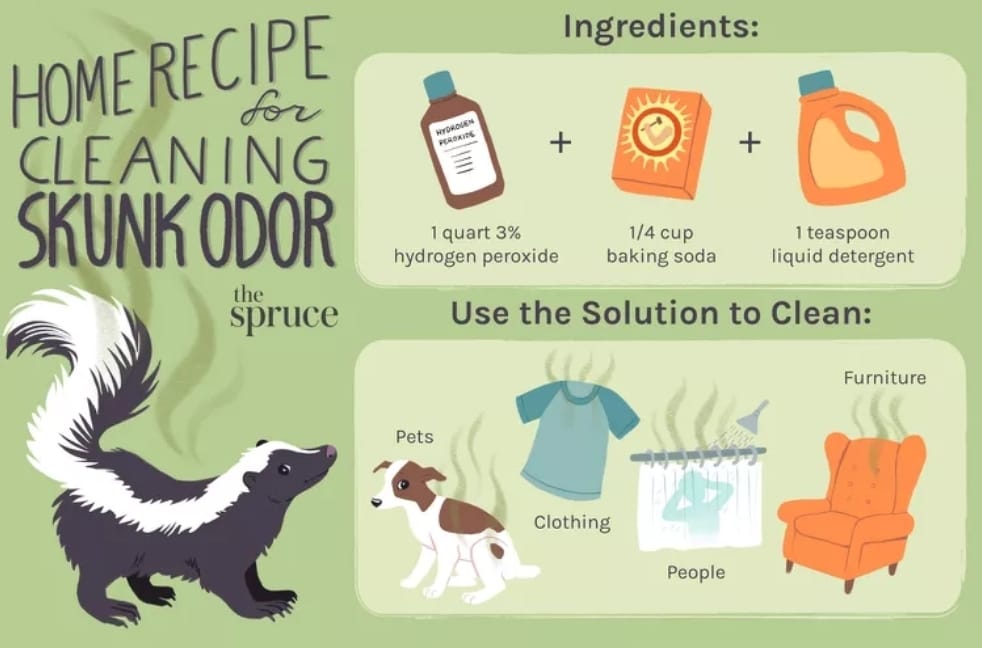
The secretions from a skunk’s anal glands contain a mixture of sulfur-containing thiols and thioacetates. Thiols are immediately very pungent. Thioacetates are not as initially smelly, but when mixed with water, they convert to thiols. Because of this, any thioacetates trapped in the dog’s fur will cause a dog to continue to smell skunky after a bath from exposure to water. The dog may smell slightly of skunk when wet for a few months afterward.
Contact your vet if they have sprayed:
- Pets Eyes: Skunk spray can act like tear gas, causing redness, burning, and excessive tearing.
- Pets Mouth: Skunk spray can cause drooling, nausea, and vomiting. If sprayed directly in the mouth, it can also cause possible mouth ulcers.
- Pets Inhaling: Skunk spray can cause respiratory irritation.
Skin irritation
If your dog has skin irritation on their face after being sprayed by a skunk, it’s likely due to the irritating chemicals in the skunk spray, which can cause redness, itching, and discomfort on contact with sensitive skin, especially around the eyes and mouth; it’s important to wash your dog thoroughly with a specialized skunk-removal shampoo if possible and consult your veterinarian if the irritation is severe or doesn’t improve.
Key points about skunk spray and skin irritation in dogs:
Chemical composition: Skunk spray contains thiols, which are strong-smelling compounds that can irritate the skin and mucous membranes.
Areas affected: The face, particularly around the eyes and nose, are often the most affected areas due to their sensitivity.
Signs of irritation: Redness, itching, scratching, swelling, discomfort, and potential eye irritation.
Here are links to read further about your pets and skunks and how to treat skunk spray.
Link…. VCA Hospitals – Skunk Spray and Your Dog
Link…. Can help with bathing..
ASPCA – What to Do If Your Dog Gets Sprayed by a Skunk
Link…
The Humane Society of the United States – What to do when a skunk sprays your dog
NOTE…If your pet has more then usual/severe reactions, and pet is struggling with breathing, vomiting often, eye difficulties, please seek immediate veterinarian care.
**The Vet Corner groups encourage members to establish a relationship with their local veterinarian, don’t wait until an emergency.**
© 2014-2025 Rural Veterinary Outreach. All Rights Reserved.
 RVO Vet Corner Files
You must be logged in to post a comment.