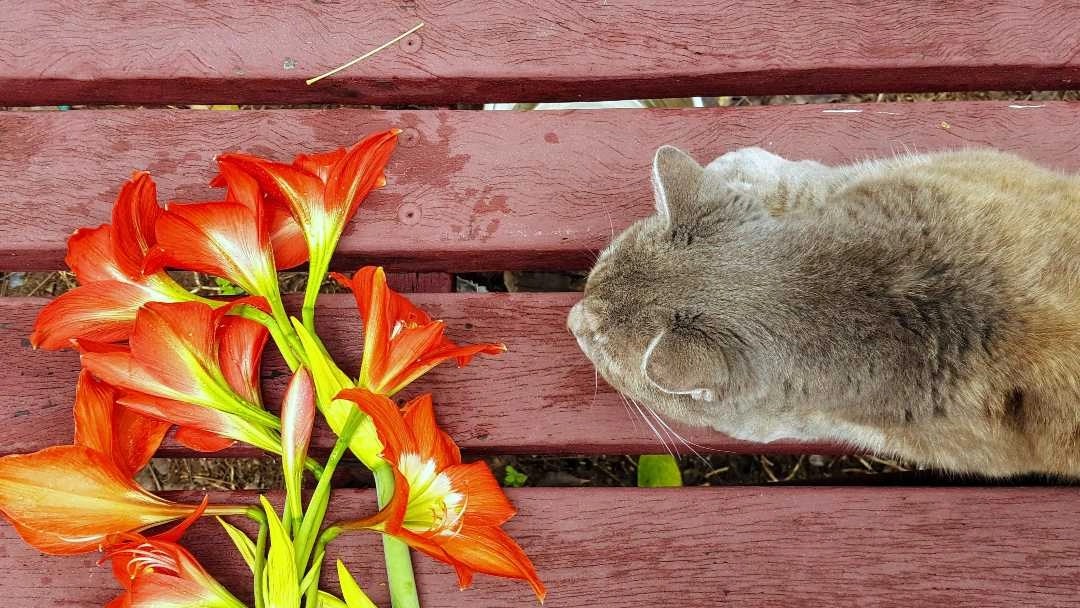
By Deb Haines
Lily toxicity signs will vary among cats and these dangerous plants affect some pets more than others. The reason is unclear. Lily toxicity signs occur less than 12 hours after ingestion and renal damage occurs between 12 and 24 hours after exposure. Signs include:
- Decreased activity
- Lethargy
- Excess drooling
- Nausea and vomiting
- Decreased appetite
- Increased thirst
- Increased urination
- Dehydration
- Lack of urination after one or two days
Pets undergoing treatment for lily toxicity will likely require an extended hospital stay and several follow-up appointments to ensure their kidneys are healthy. This long-term care can result in a large veterinary bill due to the length of treatment involved.
Less Harmful “Lilies” for Cats and Dogs
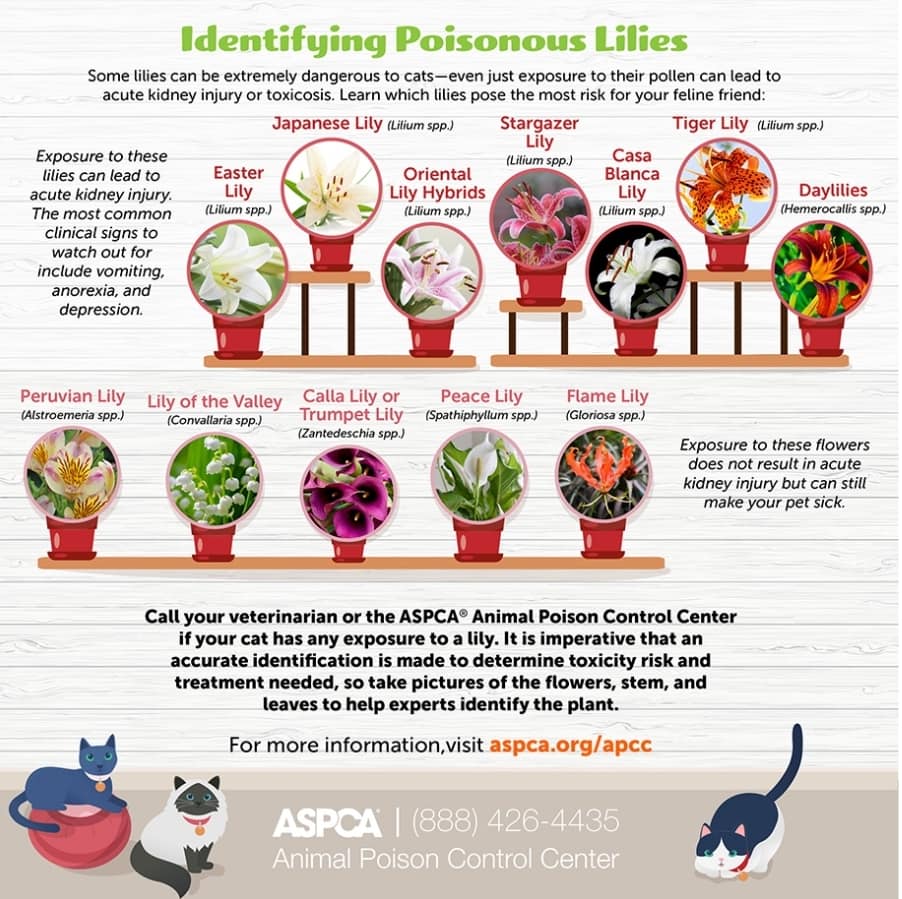
Both calla lilies and peace lilies contain insoluble crystals of calcium oxalates (insoluble means the crystals don’t dissolve in water). When a cat or dog chews on or bites the plant, the crystals are released and directly irritate the mouth, tongue, throat, and esophagus,vomiting, and diarrhea.
The Peruvian lily contains a toxin that causes mild stomach upset (vomiting and diarrhea) if a cat or dog ingests a large amount. The signs usually go away on their own.
The Popular Easter Lily
For dogs, consuming bits of Easter Lily can leave them with a stomach upset and digestive issues.
For cats, however, consuming parts of the Easter Lily can be deadly.
*If you suspect that your cat has eaten any part of a lily or its pollen or has drunk water from a vase containing lilies, immediately call your veterinarian or a pet poison control center.
*ASPCA Poision Control… If you think your pet may have ingested a potentially poisonous substance, call (888) 426-4435.
*Pet Poison Helpline: Please note that Pet Poison Helpline is a phone-based service and we do not handle poisoning cases submitted via email. Please call us at (855) 764-7661 for 24/7 life-saving care!
*We encourage our members to establish a client/vet relationship with your local veterinarian clinic/hospital.
Best solution is to not have lillies in home or around home with pets, especially cats.
*Check all plants to see what is not toxic to pets, this is not listing all in the lily family, just most popular.
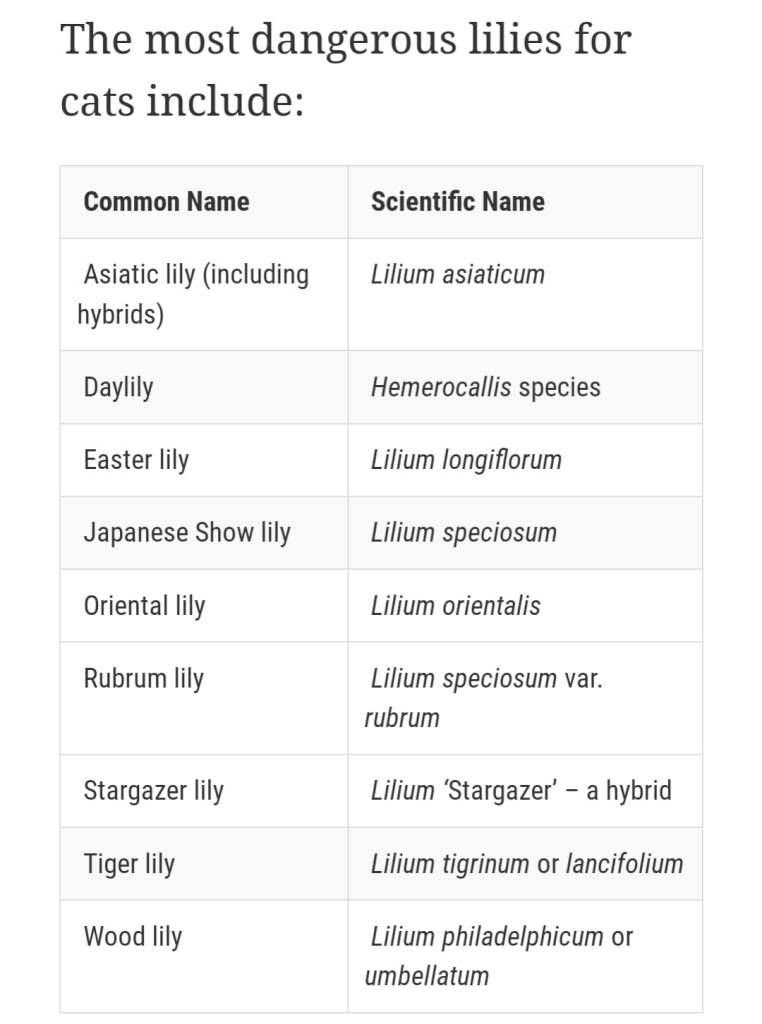
The lists below can help you identify the lilly.
**The Vet Corner groups encourage members to establish a relationship with their local veterinarian, don’t wait until an emergency.**
© 2014-2025 Rural Veterinary Outreach. All Rights Reserved.
 RVO Vet Corner Files
You must be logged in to post a comment.